





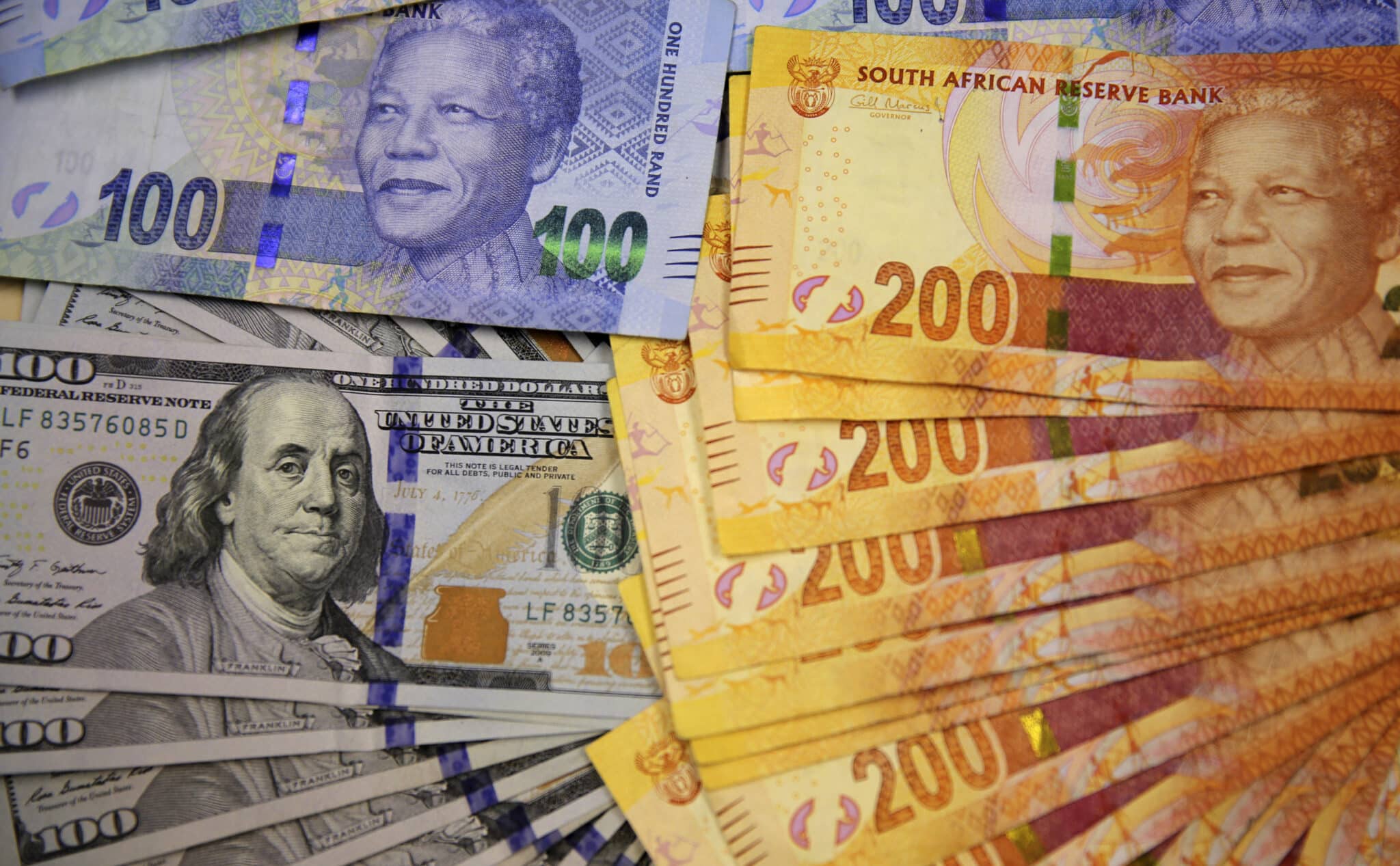
South Africa’s rand made a notable recovery against a weaker U.S. dollar on Monday, buoying hopes for stability after recent bouts of extreme volatility. At 0638 GMT, the rand was trading at 18.9675 to the dollar, reflecting a strong 1% increase compared to its previous close.
The current dynamics underpinning South Africa’s financial markets are indicative of a complex interplay between domestic political stability and international trade relations. The rand’s recovery is attributed in part to a backdrop of trade tensions stemming from U.S. President Donald Trump’s trade policies, as well as growing concerns that a vital coalition partner could withdraw from the South African government. These geopolitical uncertainties have created a climate rich with volatility for the local economy.
Despite this unpredictability, South Africa’s markets are cautiously optimistic. The Johannesburg Stock Exchange (JSE) has witnessed a positive trend, with the Top 40 index climbing 0.45%, adding momentum to the previous 4.5% rally. This upward trajectory aligns with the influx of foreign investments in South African bonds and equities, driven by a rise in business confidence and a string of successful government Treasury bill auctions.
- The recent easing of U.S. trade tariffs on smartphones and computers has provided relief on Wall Street, further enhancing investor sentiment.
- However, uncertainty looms around future tariff implementations, illustrating the precarious nature of global trade relations.
- As the major banks kick off their earnings season, the implications of international policies on South African markets cannot be overlooked, particularly given the potential attendance of President Trump at the G20 summit focused on African mineral beneficiation.
So, why should South Africans care about these market movements? For one, the JSE’s modest uptick signifies a cautious resurgence of investor confidence despite looming external pressures. Yet, it remains essential for investors to tread carefully, as geopolitical risks—including trade policies and upcoming political events—could incite further volatility.
Taking a step back to view the larger picture, it becomes clear that South Africa’s economic strategy must navigate a labyrinth of global challenges. Ongoing U.S.-China trade negotiations and ever-changing tariff landscapes necessitate robust international partnerships at forums like the G20 summit.


