



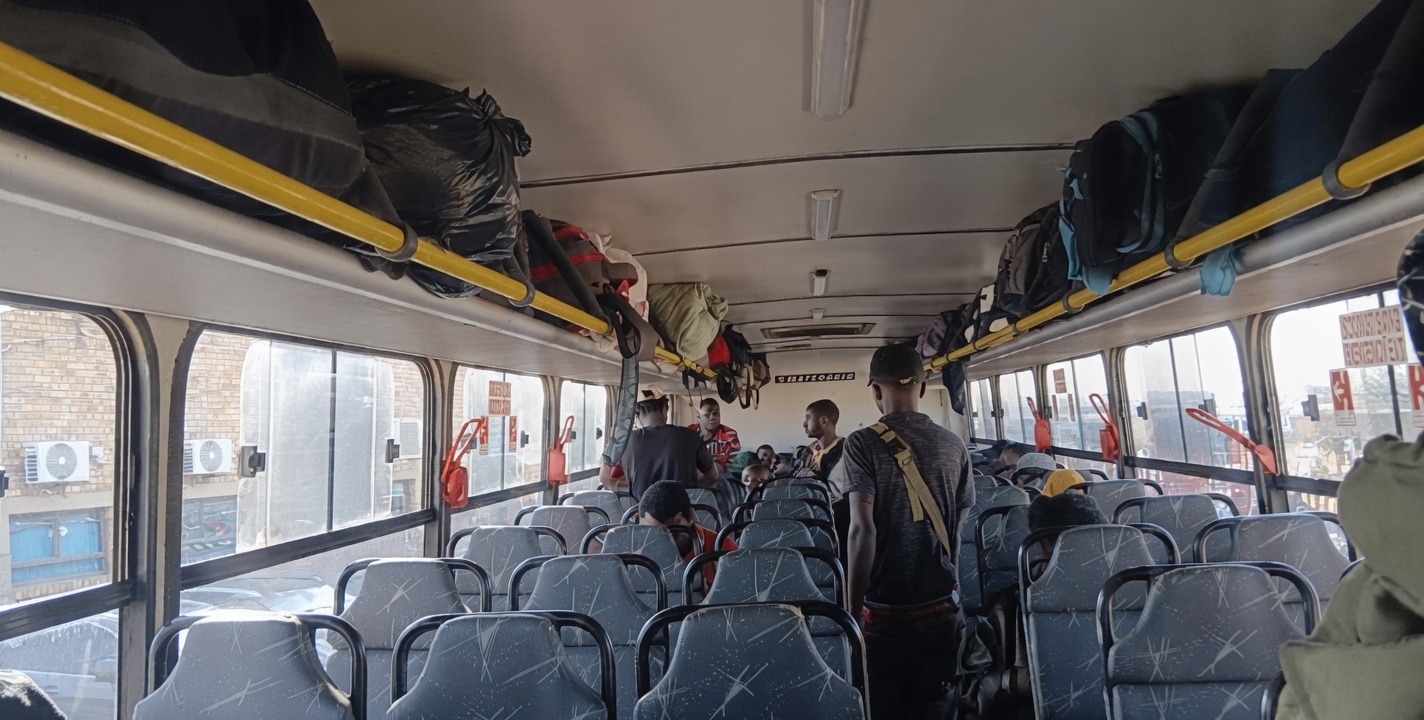
After hours of uncertainty, hunger and growing tensions, more than 1,000 undocumented Malawian nationals who had been stranded at a bus depot in Phumla Mqashi informal settlement, south of Johannesburg, finally began their long journey back home on Tuesday.
The group, transported from Durban as part of a repatriation process, spent most of the day waiting for replacement drivers before 17 buses could continue their trip to Malawi.
For many of those leaving, the journey home comes after losing jobs and running out of options in South Africa.
Often Anderson, who admitted to being in the country illegally, said his employer had recently dismissed him because he did not have the required documentation.
“The place where I work said they don’t want us anymore because we don’t have papers and they sent us here,” he said.
Anderson said he had been working at a snack manufacturing company in Mayfair before finding himself among hundreds of stranded migrants.
“Now I find myself here. I’m hungry and don’t have a cent,” he said.
McMillan Banda told a similar story. He said finding work in South Africa had become increasingly difficult because he lacked legal status.
“I came from Cape Town and was told I would get a bus home here,” he said.
Although Banda possesses a passport, he does not have a work permit. According to him, many employers have become unwilling to hire undocumented foreign nationals.
While the Malawians waited for transport, frustration was also mounting among residents of Phumla Mqashi, who questioned why such a large group had been brought into their community without consultation.
Community leader Sibonelo Makhubele criticised authorities for keeping the group in the area.
“Why did they bring them here to Phumla Mqashi? They say illegal foreign nationals must go back home, so what are they still doing here?” he asked.
Makhubele argued that alternative routes could have been used instead of bringing the buses into the informal settlement.
However, Sizabantu depot manager Ridwan Moosa defended the operation, explaining that the stop in Johannesburg was necessary to replace drivers.
“They were transported from Durban by drivers who do not have passports to travel outside South Africa. Other drivers had to be swapped in here so they could continue the journey to Malawi,” he said.
Replacement drivers eventually arrived later in the day, allowing the convoy to depart.
One driver, who spoke on condition of anonymity, said he had been deployed to assist despite normally working for Rea Vaya.
“You know Rea Vaya has financial problems, so they took us here to help,” he said.
He added that the journey to Lilongwe, Malawi’s capital city, could take as long as 24 hours.
As evening approached, police escorted the convoy of 17 buses carfing 65 people each out of the area while residents who had been picketing outside the depot celebrated their departure.
The departure scenes were emotional and, at times, tense. Many of the Malawians waved goodbye from bus windows as they left South Africa behind. Others appeared defiant, with some showing middle fingers to onlookers and signalling that they intended to return one day.
For the residents of Phumla Mqashi, the departure marked the end of a day filled with anger, uncertainty and protest. For the Malawians on board, it marked the beginning of a long journey home after hopes of building a future in South Africa came to an abrupt end.

