


The South African National Editors’ Forum (SANEF) has strongly condemned remarks made by KwaZulu-Natal police commissioner Lieutenant-General Nhlanhla Mkhwanazi, accusing him of launching an unprecedented attack on media freedom.
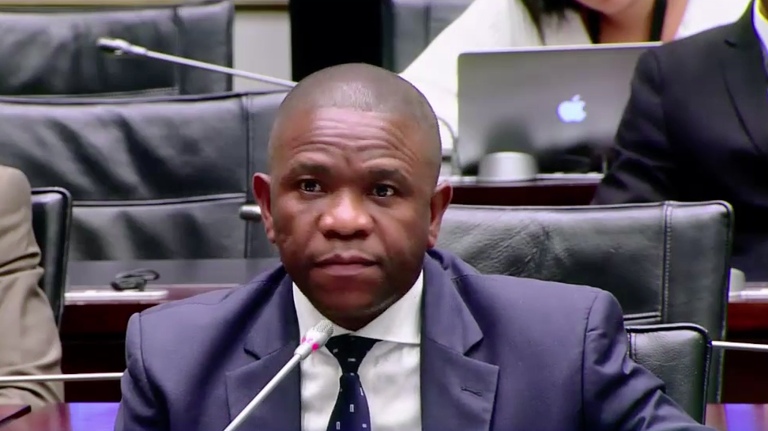
Mkhwanazi made the comments on Tuesday night during a sitting of Parliament’s ad-hoc committee investigating his whistleblowing allegations on South African Police Service.
Inn a strongly worded statement Sanef said instead of focusing on the inquiry, he called on the committee — and the Joint Standing Committee on Intelligence — to direct state security agencies to conduct a counterintelligence investigation against members of the South African media.
On Wednesday mid-morning, Mkhwanazi doubled down, calling for “heavy penalties” against journalists who make errors in their reporting.
SANEF described his remarks as a “chilling attack” on the constitutional right to a free press, warning that such actions echo the repressive tactics of the apartheid era used to silence journalists.
“We hope this will be publicly condemned by National Police Commissioner Fannie Masemola and Police Minister Firoz Cachalia as an unwarranted and unsubstantiated overreach of his powers,” SANEF said.
The controversy stems from media coverage of the Inspector-General of Intelligence (IGI) report, which allegedly implicates several top police officials in wrongdoing. The IGI report reportedly recommends that Commissioner Masemola face criminal and disciplinary action for authorising the purchase of properties worth R120 million by the Crime Intelligence Division.
It also calls for action against suspended Crime Intelligence head Major-General Dumisani Khumalo and suspended CFO Major-General Philani Lushaba for alleged gross financial misconduct.
During his testimony, Mkhwanazi reportedly singled out journalists from Sunday Times, City Press, and News24, claiming they had reported on classified material. He argued that investigations into Crime Intelligence should be conducted in secret, even when corruption is alleged, because exposing such activities could “destabilise the country.”
However, SANEF noted that South African courts have long upheld the protection of journalists’ sources in the public interest — citing landmark cases such as Bosasa vs Basson (2012) and SABC vs Avusa (2010).
“These threats against journalists and their sources are intimidation tactics meant to shield the corrupt and prevent legitimate journalistic work in the public interest,” SANEF added.
The editors’ forum emphasised that Crime Intelligence is not above the law, pointing out that journalists have played a crucial role in exposing the misuse of secret state funds over the years.
SANEF urged Minister Cachalia and Commissioner Masemola to publicly denounce any attempt to intimidate journalists or whistleblowers, warning that silence would endanger South Africa’s democracy.
“Failure to do so will herald the destruction of any semblance of democratic process in our country and push us further into a place where unchecked power can no longer be interrogated,” SANEF said.


