




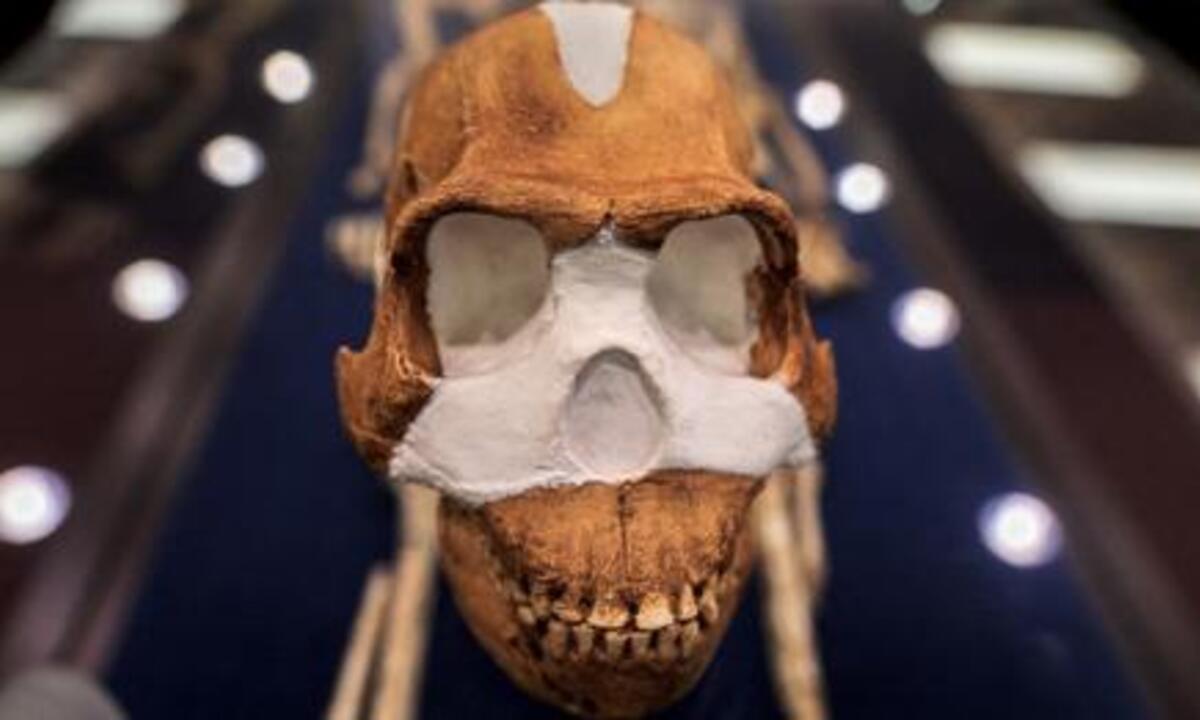
Palaeontologists said on Monday that they had discovered the oldest known burial site in the world, which contained the remains of a primitive human distant relative once believed to be incapable of complex behaviour.
In the Cradle of Humankind, a UNESCO world heritage site close to Johannesburg, researchers led by famous palaeoanthropologist Lee Berger claimed to have found multiple examples of Homo Naledi, a tree-climbing Stone Age hominid, buried around 30 meters (100 feet) underground in a cave system.
The researchers stated in a series of yet-to-be peer-reviewed and preprint papers to be published in eLife that: “These are the most ancient interments yet recorded in the hominin record, earlier than evidence of Homo sapiens interments by at least 100 000 years.”
The results cast doubt on the conventional wisdom of human evolution, which holds that the growth of larger brains enabled the performance of complex, “meaning-making” acts like burying the dead.
The oldest burials ever discovered were in the Middle East and Africa, and they were about 100,000 years old. They contained Homo sapiens’ remains.
The ones discovered in South Africa by Berger and his colleagues, whose prior statements have generated controversy, date back at least 200 000 BC. While further analysis is required, these discoveries have the potential to reshape our understanding of human evolution. aljazeera