





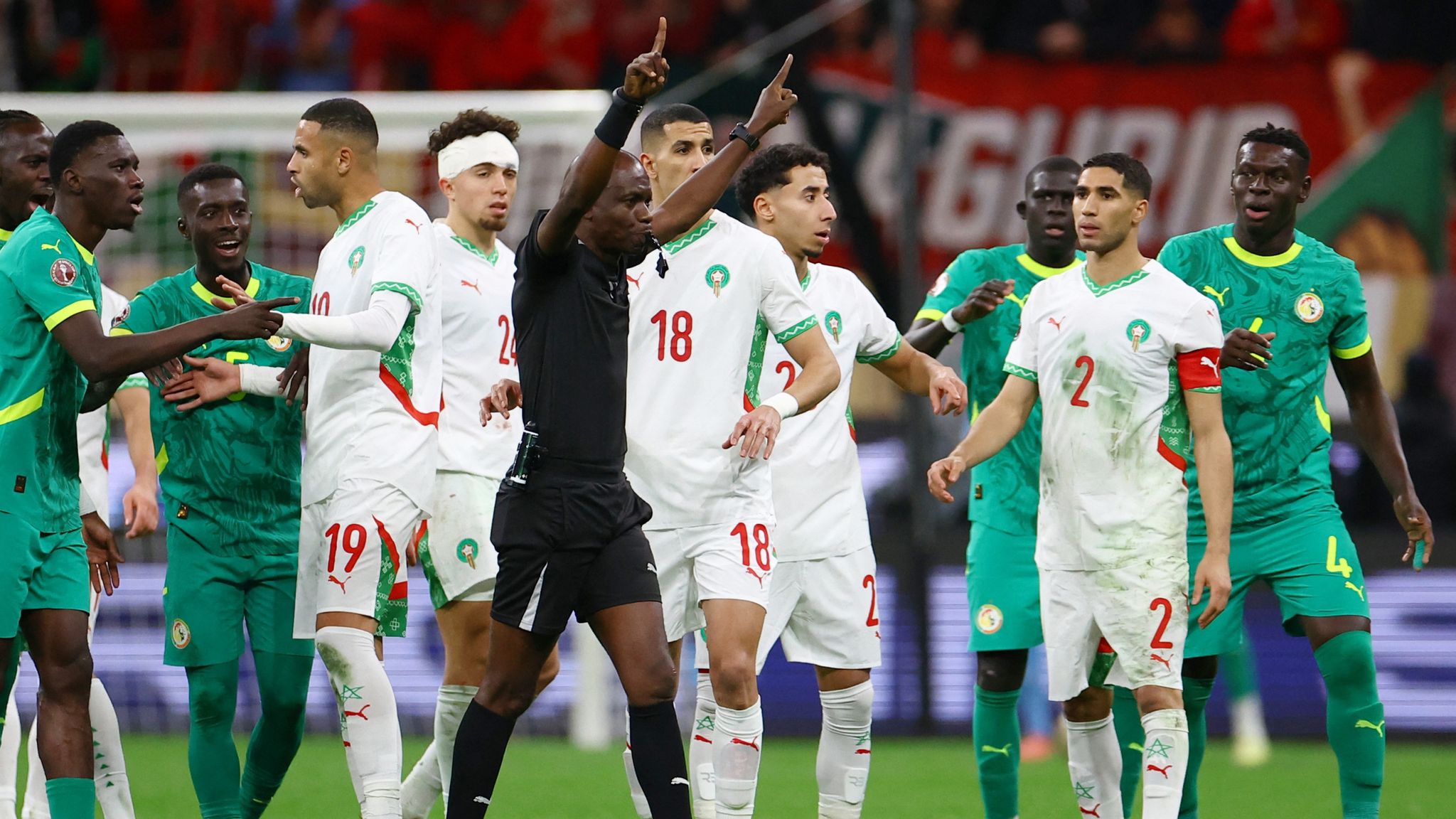
The Confederation of African Football (CAF) has stripped Senegal of their 2025 Africa Cup of Nations (AFCON) title following a controversial ruling by its appeals board. Host nation Morocco has been awarded the championship on default, with the January final result overturned from Senegal’s on-field 1-0 victory to a 3-0 forfeit win for the Atlas Lions.
The decision stems from chaotic scenes in the final held in Rabat on January 18-19, 2025. Late in regulation time, a VAR-reviewed penalty was awarded to Morocco, prompting Senegal’s players—led by coach Pape Thiaw—to walk off the pitch in protest for approximately 15 minutes. Amid rising tensions, fans attempted to invade the field. Senegal eventually returned, Morocco missed the penalty, and the match resumed, with Senegal scoring in extra time to secure the win and lift the trophy.
Morocco’s Royal Football Federation (FRMF) appealed the outcome, arguing that Senegal violated tournament rules by abandoning the field without referee permission. Initially, CAF’s disciplinary board rejected the protest and imposed fines and suspensions instead. However, the appeals board upheld Morocco’s case on March 17, 2026, citing Articles 82 and 84 of the AFCON regulations. These provisions state that a team refusing to play or leaving the pitch without authorization forfeits the match and faces elimination, with the opponent awarded a 3-0 default victory.
CAF’s statement declared: “The Senegal National Team is declared to have forfeited the Final Match… with the result of the Match being recorded as 3–0 in favour of the Fédération Royale Marocaine de Football.”
The ruling has sparked outrage in Senegal. The Senegalese Football Federation (FSF) labeled the decision “unfair, unprecedented, and unacceptable,” claiming it “discredits African football” and stems from a “manifestly erroneous interpretation” of the rules. It directly contradicts principles of sporting ethics, including fairness, loyalty, and respect for the game’s truth, the federation argued. Senegal’s government echoed the condemnation, calling the ruling “grossly illegal and deeply unjust.” In a strongly worded statement, officials pledged to pursue all legal avenues, including suspicions of corruption within CAF, and vowed to challenge the decision through every appropriate channel.
The FSF confirmed it will appeal “as soon as possible” to the Court of Arbitration for Sport (CAS) in Lausanne, Switzerland. Such appeals can take up to a year or longer to resolve, leaving the title’s status in limbo pending a final verdict. Morocco’s federation welcomed the outcome, emphasising that the appeal focused solely on enforcing established rules applicable to all teams, not on disputing on-field performances. “CAF has acknowledged that the rules… had not been respected,” they stated. This marks one of the most dramatic post-match reversals in AFCON history, raising questions about referee authority under global Laws of the Game (IFAB Law 5) versus CAF’s specific regulations. CAF President Patrice Motsepe has defended the appeals board’s independence and said the organisation will abide by any higher ruling, such as from CAS.
As the fallout continues, the episode highlights ongoing tensions in African football governance, refereeing controversies, and the high stakes of continental tournaments.


