



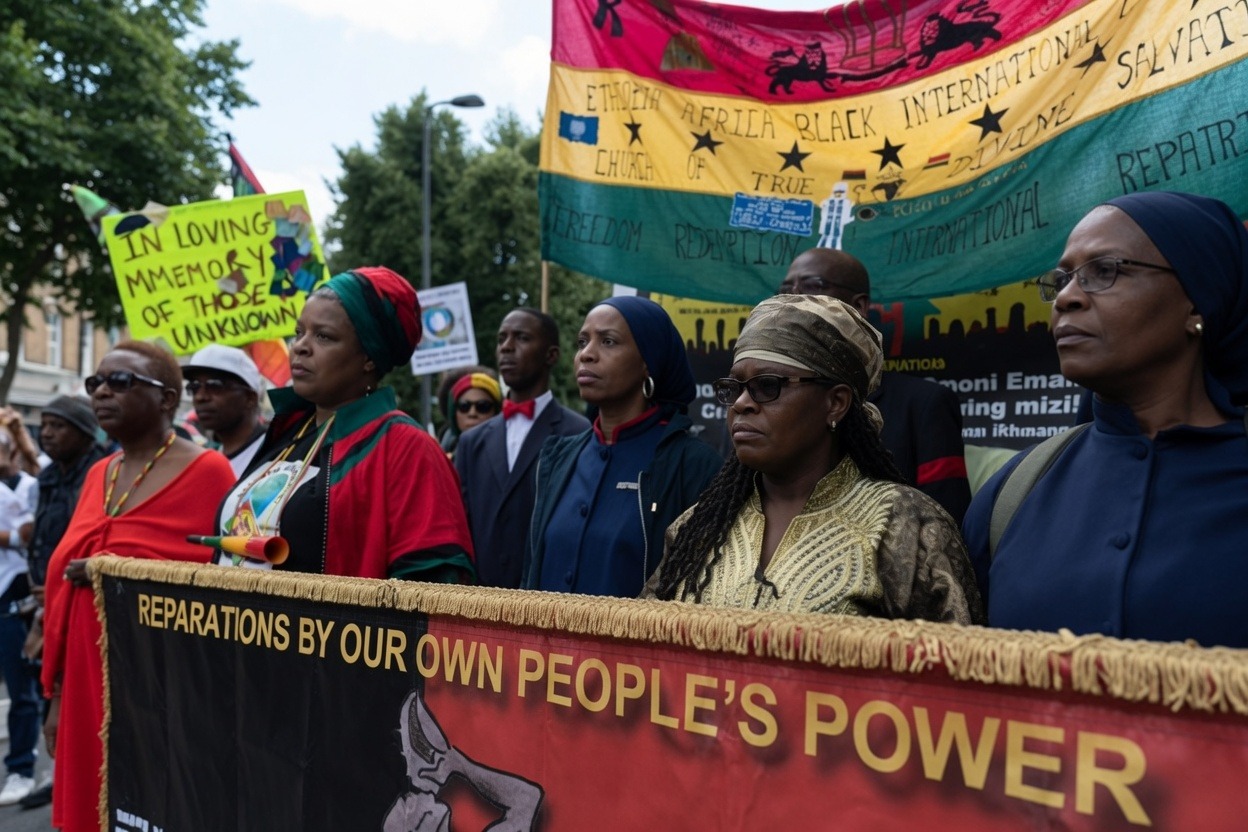
South Africa is the latest country to join the push for reparations for the grave crimes of slavery and colonialism.
African governments and their counterparts in the diaspora are mounting the strongest-ever campaign for accountability for both colonialism and slavery, which Western powers perpetrated over centuries.
South Africa has endorsed the campaign led by Ghanaian President John Mahama, despite fierce resistance from European countries.
South Africa’s experience in negotiating peace in instances such as its own transition from apartheid to a mass-based democracy, as well as in Sudan, Zimbabwe, Mozambique and the Democratic Republic of Congo (DRC), is widely expected to bolster the continent’s efforts.
While Pretoria is yet to finalise details regarding the nature of its contribution to the demand for reparations, the matter is a priority for the government and is close to the heart of President Cyril Ramaphosa.
“The President believes reparations are worth pursuing. However, we are yet to consolidate our position as a government with respect to how we would want to participate in the process and the formulation of our substantive inputs,” said Ramaphosa’s spokesperson, Vincent Magwenya.
While Britain, France, the United States and others have sought to distance themselves from the evils of the transatlantic slave trade and colonialism, merely offering verbal apologies, the movement demanding compensation — both on the African continent and in the diaspora — is gaining momentum, with more voices calling for economic justice.
Even in South Africa, which is currently facing punitive measures from the United States and its allies, partly due to the implementation of domestic redress measures, calls for accountability for the injustices of slavery and colonialism are being amplified. Harsh measures by the Donald Trump administration in the US, including the promotion of “white genocide” misinformation, were aimed at undermining the country’s reform agenda, but appear to have had little impact, with political actors continuing to insist on compensation.
The South African Communist Party (SACP), an ally of the ruling African National Congress, is the latest organisation to call for economic reparations. The party said even the apologies made by countries such as Britain and France lacked sincerity and could not replace the much-needed compensation and accountability.
“Those apologies are hollow because those countries built their civilisation on the exploitation of African people and other peoples of the Global South. Those apologies are hollow, and they do not deserve to be praised. They make moralistic apologies when what we really demand is economic compensation for the crimes committed against Africans,” said SACP General Secretary Solly Mapaila.
Mapaila said the party believes the demand for reparations should be pursued in a more radical manner.
“The struggle has to be more radical, particularly considering that those who have the blood of the children of Africa on their hands continue to pillage the resources of the continent, which is an indication that they have no remorse. We must demand what is due to us to fund our developmental agenda,” said the SACP leader.
The South African government also supports the demand for reparations.
“South Africa advances the reparations agenda through multilateral and collective African processes, including support for the African Union common position and engagement within the United Nations system. Government policy emphasises acknowledgement of historical injustices, restorative justice and equitable international partnerships, pursued in a manner consistent with constitutional values, international law and multilateral cooperation.
“Should formal negotiations on reparations with former colonial powers commence, including the establishment of timelines or compensation mechanisms, Parliament will be informed accordingly,” said International Relations Minister Ronald Lamola in a recent parliamentary reply.
Following the recent adoption of a 19-point global framework at the Africa-CARICOM summit in Accra, Ghana, the global reparations movement is expected to insist on clear timelines and concrete plans for compensation rather than verbal apologies alone.
Meanwhile, European Union member states are continuing with threats to reject visa applications from citizens demanding reparations.
H.E. Jean Robert Pillard, the Ambassador of Haiti to South Africa, said it is not a matter of if, but when reparations must be paid.
“We have been more than reasonable and patient. It is time for the West to not just own up but also take accountability. We need to intensify our struggle in this regard,” he said.