


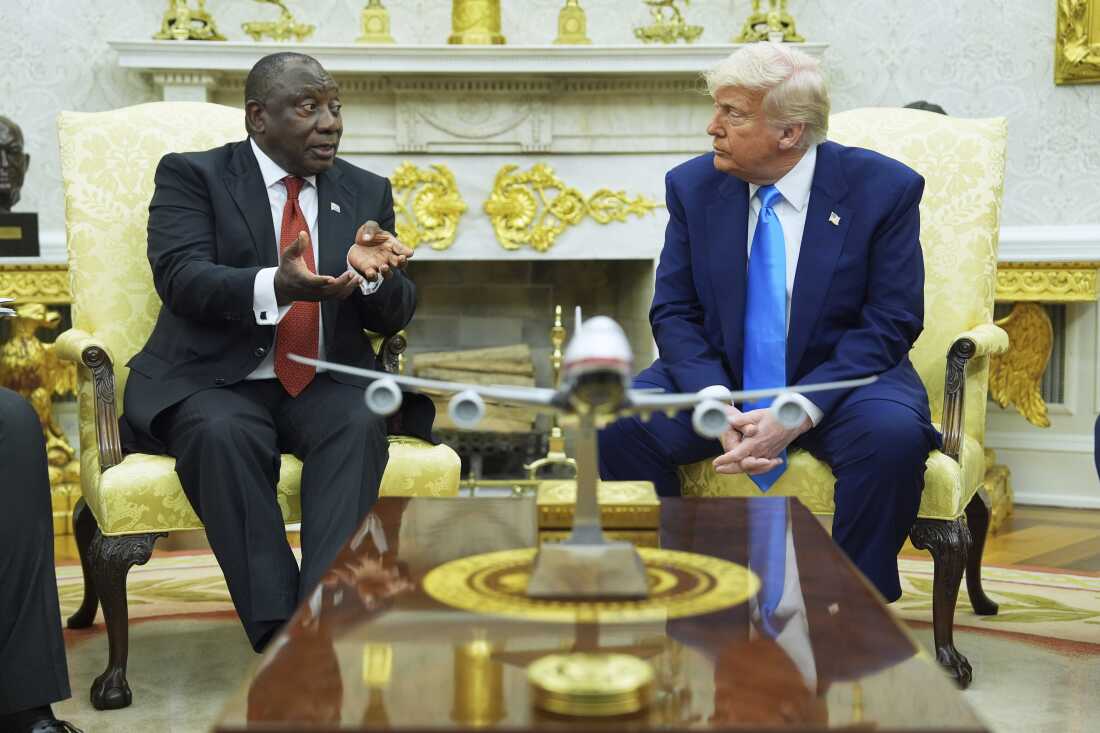
As the clock ticks down to a significant deadline, South Africa is gearing up to resume vital trade negotiations with the Trump administration during the upcoming USAfrica Business Summit in Luanda, Angola, from June 22-25. This meeting comes at a critical time, with reciprocal tariffs threatening to come into effect on July 9, marking a crucial juncture for South Africa’s economy.
Following President Cyril Ramaphosa’s meeting with US President Donald Trump earlier this year, where South Africa’s negotiating team presented a proposed framework agreement, officials aim to finalise the details of a complex array of proposed trade initiatives. These initiatives seek to not only strengthen economic ties between South Africa and the US but also to mitigate the impact of imminent tariff increases that could triple current rates for several key sectors.
The focus of the negotiations will include ambitious plans that centre around enhancing liquid natural gas (LNG) imports, establishing a joint fund dedicated to the exploration of critical minerals, and securing duty-free quotas for the auto and steel industries. At the heart of this discourse is South Africa’s strategic intent to bolster its trade balance while navigating the complexities of global trade dynamics.
According to sources close to the negotiations, discussions on the technical details of the agreement have been ongoing, indicating a proactive approach towards resolving any outstanding issues before the looming deadline. However, South Africa finds itself in a challenging position, having fallen behind other countries, most notably India and the UK, in the race to secure favourable trade arrangements with the US.
With tariff implementation rapidly approaching, South African officials are advocating for maintaining the current duty levels until a comprehensive agreement can be reached. “Effectively what we have put forward tries to be a mitigating factor for July 9,” expressed Xolelwa Mlumbi-Peter, South Africa’s Deputy Director-General for Trade, during a recent parliamentary session in Cape Town.
One of the pivotal points of contention involves Washington’s ongoing trade grievances against South Africa, which span various sectors including vehicles, citrus, and meat. However, the challenges are not solely economic; they also delve into complex political narratives that have emerged. Notably, President Trump has perpetuated unfounded claims regarding land seizures affecting white farmers in South Africa, which has further complicated diplomatic relations between the two nations.
In response to these challenges, South Africa has embarked on a broader strategy to diversify its export markets. “We have identified 22 critical markets that we need to diversify our exports to,” said Mlumbi-Peter, highlighting an essential pivot to reduce reliance on the US market and enhance economic resilience.
The proposed initiatives are ambitious and aim to foster deeper economic cooperation. This includes the establishment of a joint fund for critical minerals exploration, a duty-free quota for 40,000 vehicles annually for the US auto industry, and a provision for duty-free access to automotive components produced in South Africa. Additionally, there is a target to increase LNG imports from the US, reaching up to 100 petajoules annually over the next decade, potentially generating significant trade values amounting to $12 billion.