


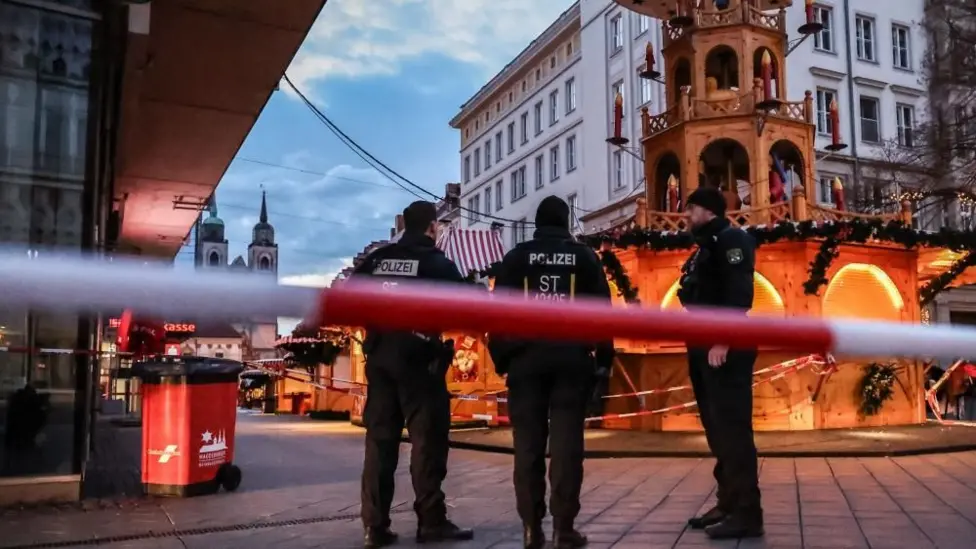
In a shocking turn of events that has left Germany reeling, a man has been accused of killing five people and injuring over 200 others by driving his car into a crowded Christmas market in Magdeburg on Friday. The suspect, identified as Taleb Al Abdulmohsen, a 50-year-old Saudi Arabian psychiatrist, was apprehended at the scene, leading authorities to believe that he acted alone in this horrific assault.
As investigations unfold, it has emerged that Al Abdulmohsen had a troubling history marked by increasingly dark and threatening anti-Islam statements directed at Germany in recent months. Once known for his efforts to provide a voice to those escaping repressive regimes in Saudi Arabia and other Gulf states, the psychiatrist’s descent into radical rhetoric raises questions about his motivations and the tragic turn of events that led to the fatal attack.
Having relocated to Germany in 2006, Al Abdulmohsen initially championed human rights by establishing the online platform wearesaudis.net, where he shared advice and support for individuals seeking freedom from oppressive governments. His work appears to stand in stark contrast to his later inflammatory views, marking an unsettling transformation that has baffled many who were familiar with his earlier activism.
In the wake of the attack, German authorities are grappling with the fear and confusion that has swept through the nation as citizens come to terms with the tragic loss of life and the injuries inflicted upon so many. The Christmas market, a cherished seasonal event, has since become a site of mourning rather than celebration.
Witnesses describe scenes of chaos, with screams and panic echoing as the vehicle ploughed through the market, which was bustling with families and friends enjoying the festive atmosphere. The aftermath has sparked a renewed conversation about security at public events and the nature of domestic threats, especially as extremist rhetoric becomes increasingly prevalent.
For now, the focus remains on understanding the motives behind this attack and ensuring that justice is served for the victims and their families. As the investigation continues, the questions mount: How does an individual transition from a champion for human rights to a perpetrator of such violence? What warning signs were overlooked? And, most importantly, how can society work towards preventing such tragedies in the future?