





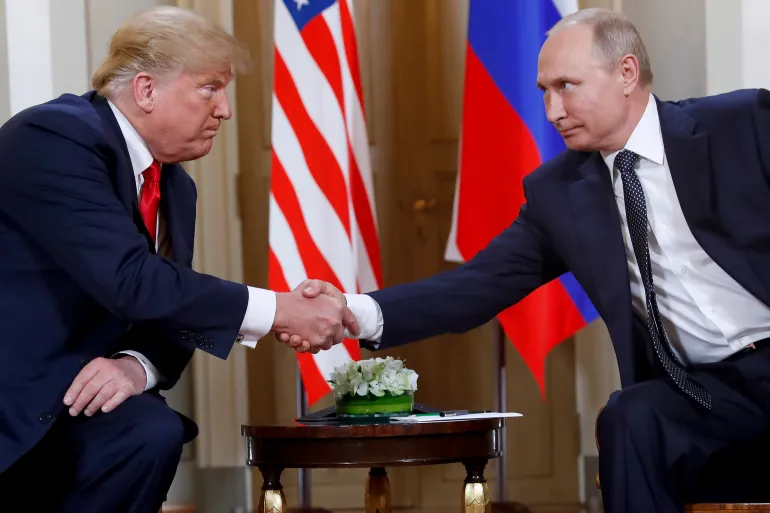
US President Donald Trump and Russian President Vladimir Putin are scheduled to hold talks next Friday, August 15, in Alaska. This summit comes amidst ongoing hostilities in Ukraine, sparked by Russia’s audacious invasion in February 2022. As both leaders attempt to navigate this complex geopolitical crisis, the world is watching closely.
The venue of Alaska carries historical significance; it was sold to the United States by Russia in 1867, and the meeting will occur relatively close to Russian territory across the Bering Strait. Kremlin aide Yuri Ushakov emphasised Alaska’s strategic importance for both nations, stating, “Alaska and the Arctic are also where our countries’ economic interests intersect, and there are prospects for large-scale, mutually beneficial projects.” However, he acknowledged that the summit’s primary focus would be exploring comprehensive ways to achieve a long-lasting resolution to the Ukrainian crisis.
President Trump, who has portrayed himself as a peacemaker in the region, expressed a relentless commitment to ending the conflict saying, “They would like to meet with me, I’ll do whatever I can to stop the killing.” His previous claims of being able to resolve the war in just 24 hours have drawn scepticism, especially given the lack of significant advancement in previous rounds of negotiations.
As the summit details emerged, one significant question remained unanswered: the involvement of Ukrainian President Volodymyr Zelensky. Trump’s special envoy, Steve Witkoff, has suggested a trilateral meeting that includes Zelensky, reflecting the Ukrainian leader’s consistent belief that establishing dialogue with Putin is essential to any progress towards peace. Yet, the Kremlin appears resistant to this notion, with Putin ruling out direct talks with Zelensky until the foundational terms of peace are established.
In terms of positions heading into the talks, a chasm remains between the expectations of Russia and Ukraine. While Russia demands that Ukraine withdraw its forces from four annexed regions and adopt a neutral stance, Kyiv is adamant that it will not recognise any Russian control over its territory. Ukraine is also seeking security assurances from Western allies, highlighting the precarious balance of power hanging over the summit.
Historically, this meeting marks the first face-to-face encounter between Trump and Putin since their interaction at the G20 summit in Japan in 2019. Trump has not shied away from controversy in his previous interactions with Putin, most notably during the Helsinki summit in 2018, where he seemed to side with the Russian leader against US intelligence assessments. As the stakes rise, the coming summit could reshape the dynamics within the region, placing immense pressure on both leaders to deliver meaningful outcomes.
Amid lingering uncertainty, it appears that Alaska has become a symbolic backdrop for dialogue designed to avert further loss of life and a protracted conflict. The world waits to see if Trump and Putin can transcend their historical rivalry in pursuit of a more peaceful future.


