





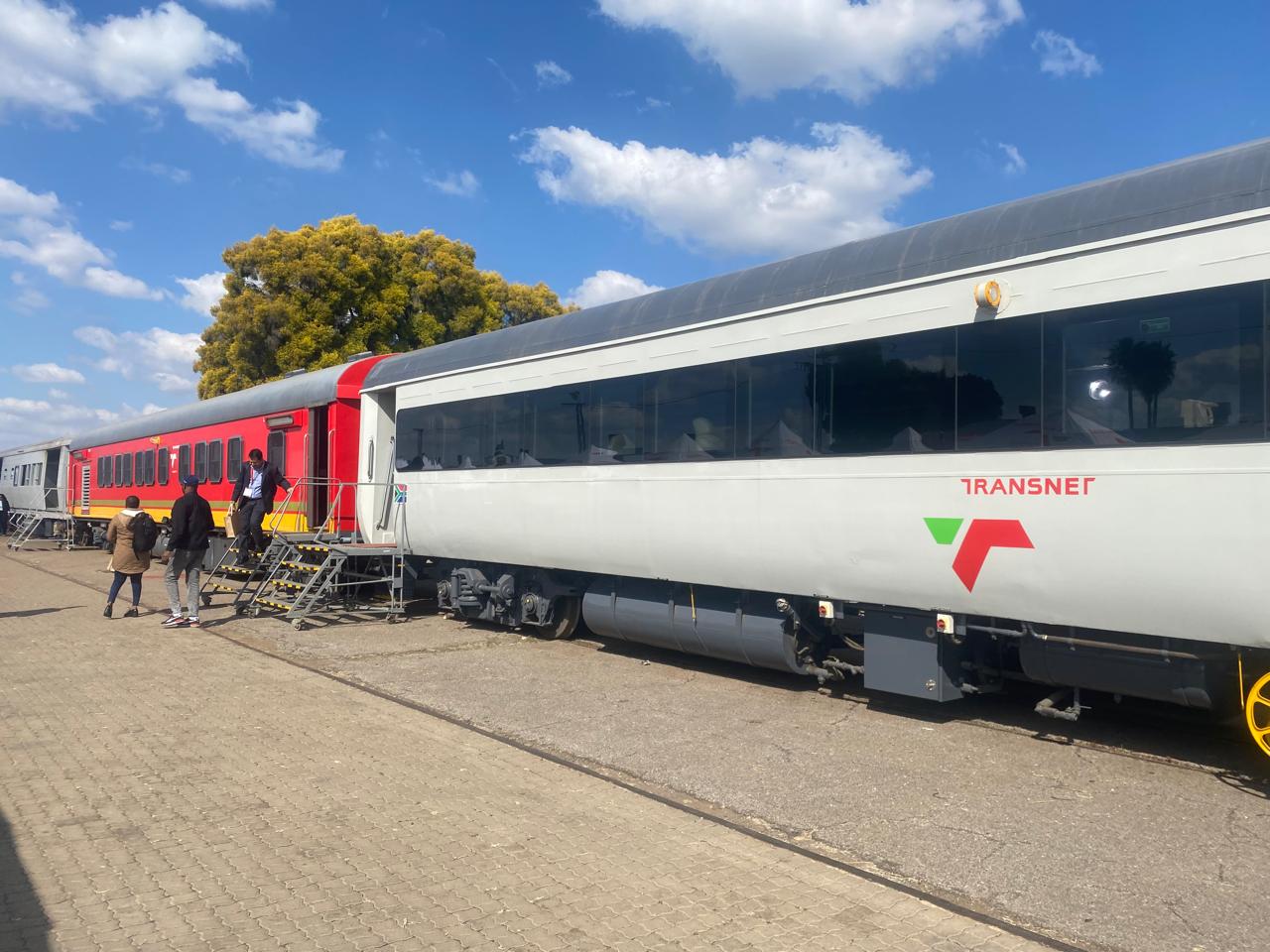
Transnet has announced its ambitious plans to become Africa’s largest manufacturer of locomotives, firmly staking its claim as an Original Equipment Manufacturer (OEM) capable of revolutionising the continent’s rail industry. At a recent exhibition held at the Kodoespoort plant outside Pretoria, the state-owned entity demonstrated its manufacturing prowess to a select audience, including delegates attending the Africa-Rail Conference in Sandton.
Bessie Mabunda, CEO of Transnet Engineering, underscored the company’s potential to cater to the burgeoning demand for high-quality wagons across Africa. “Big consumers of wagons abound across the continent,” she said. “We can produce, manufacture high-quality wagons, and while we do face competition from Chinese manufacturers, we maintain that our quality holds its ground.” She appealed to the continent’s appetite for not only wagons but also passenger trains and essential services like maintenance and refurbishment of existing rolling stock.
The entity has had a transformative year, having previously faced criticism for its reliance on Chinese suppliers for locomotives—some of which faced severe operational issues due to parts shortages and lack of engineering support. Mabunda shed light on the challenges posed by this partnership. “Of the 477 locomotives received from our Chinese OEM, a staggering 30% of our fleet’s capabilities are hindered by maintenance challenges,” she revealed. “Unsustainable supply of material and the absence of timely support from the OEM has proven detrimental to our operational objectives.”
In a bid to take control of the situation, Transnet is actively improving its manufacturing capabilities. “We’ve prioritised self-sufficiency and through our Research and Development department, we are engaged in over 60 projects aimed at sourcing alternative components for our fleet,” disclosed Mabunda, emphasising the need for innovative solutions to overcome existing obstacles.
Beyond manufacturing, Transnet is establishing a new leasing company, set to start operations within the next 18 months. This strategic move aims to bolster its competitive edge while also catering to the leasing needs of neighbouring African nations. “The continent represents a significant, untapped market, and we are prepared to seize this opportunity,” Mabunda concluded.


