




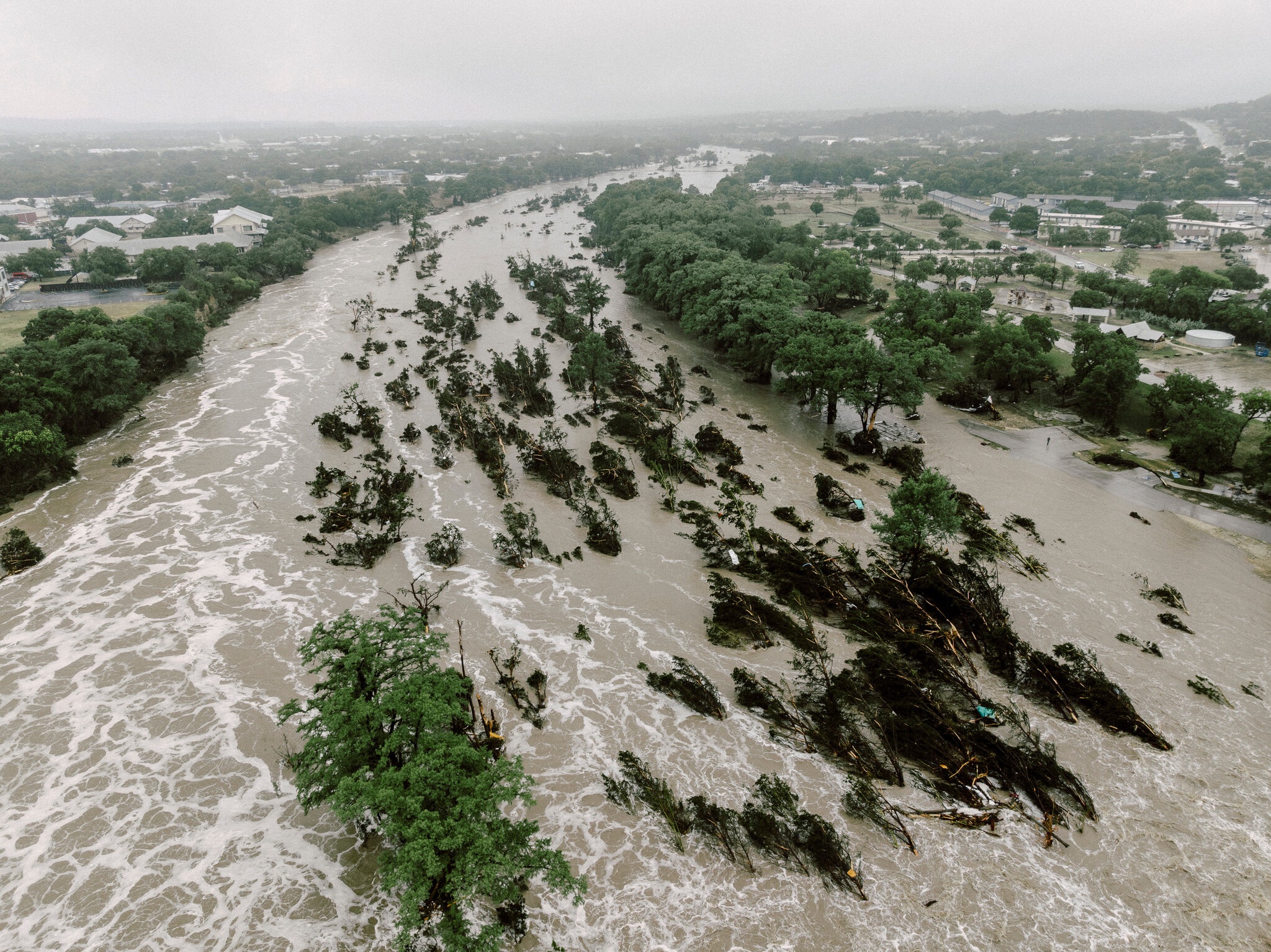
As the recovery efforts continue following devastating flash floods that claimed at least 95 lives over the recent Fourth of July weekend in Texas, questions are mounting about the effects of staffing and budget cuts under the Trump administration. Floodwaters caught many residents off guard, leading to tragic outcomes that have drawn scrutiny over whether the federal government’s reduced capacity to predict and respond to such disasters exacerbated the calamity.
The floods that swept through Texas were catastrophic, with communities like Ingram and Kerrville bearing the brunt of the destruction. Eyewitness accounts tell of late-night rescues, frantic searches for missing loved ones, and the heartbreak of vigils dedicated to the lives lost. It is within this context of grief and chaos that the decisions made by federal agencies in recent years come under the spotlight.
Since taking office, President Donald Trump’s administration has adopted a policy of slashing budgets within federal departments, including those critical to disaster preparedness and response. Reports have surfaced indicating that cutbacks at the National Weather Service (NWS), along with staffing shortages, may have hindered timely and effective forecasting. A significant portion of forecasting offices in Texas are reportedly operating without key meteorological personnel, a situation that has left some local officials unprepared for the floods’ severity.
Rick Spinrad, former administrator of the National Oceanic and Atmospheric Administration, emphasised the importance of effective communication between forecasters and local emergency services during a disaster. “The weather service did their job,” he stated, pointing to warnings and alerts issued before the event. However, many in Texas, including Kerrville’s Mayor Joe Herring Jr., expressed frustration at the lack of advance notice regarding the impending deluge. “We didn’t even have a warning. We did not know,” he lamented, revealing the chilling fallout of unfilled positions at crucial forecasting offices.
The ongoing disaster response raises additional questions about the future of Federal Emergency Management Agency (FEMA) operations under Trump’s direction. While the president quickly declared the flood zone a major disaster area, his administration has expressed intentions to reduce FEMA’s footprint and shift more responsibility to state governments. This has created anxiety around the federal response capabilities and the support available to states grappling with crises.
As investigation into the flood’s aftermath begins, the broader implications of the administration’s cuts loom large. Former meteorologists have pointed out that the current state of the NWS is worse than previously acknowledged, citing a lack of staffing and resources essential for accurate forecasting during extreme weather events. The cuts have drawn criticism not only for their immediate impact but also for potentially shaping a future where such devastation can occur largely unchecked.
In the days following the floods, community members gathered to support one another in a time of sorrow, as rescue teams worked tirelessly to locate missing individuals amid significant debris. At a vigil in Travis Park, San Antonio, mourners came together to pay respects, holding candles and sharing memories of those lost. The emotional toll of the disaster runs deep, and as residents look towards recovery, many are left questioning how policies that prioritise fiscal austerity may have contributed to the tragedy.
Local officials, historians, and climatologists now find themselves grappling with not just the immediate needs of recovery, but the long-term implications of a government that prioritises cuts over preparedness. The floods in Texas serve as a stark reminder of the delicate interplay between environmental changes, government response, and the lives of citizens caught in between.


