



The City of Tshwane has finally cleared a high-rise building belonging to controversial Nigerian developer George Asaba in Pretoria West.
The move follows a protracted legal battle which this week culminated in a court order allowing the municipality to clear the building through the eviction of its tenants and demolish the structure.
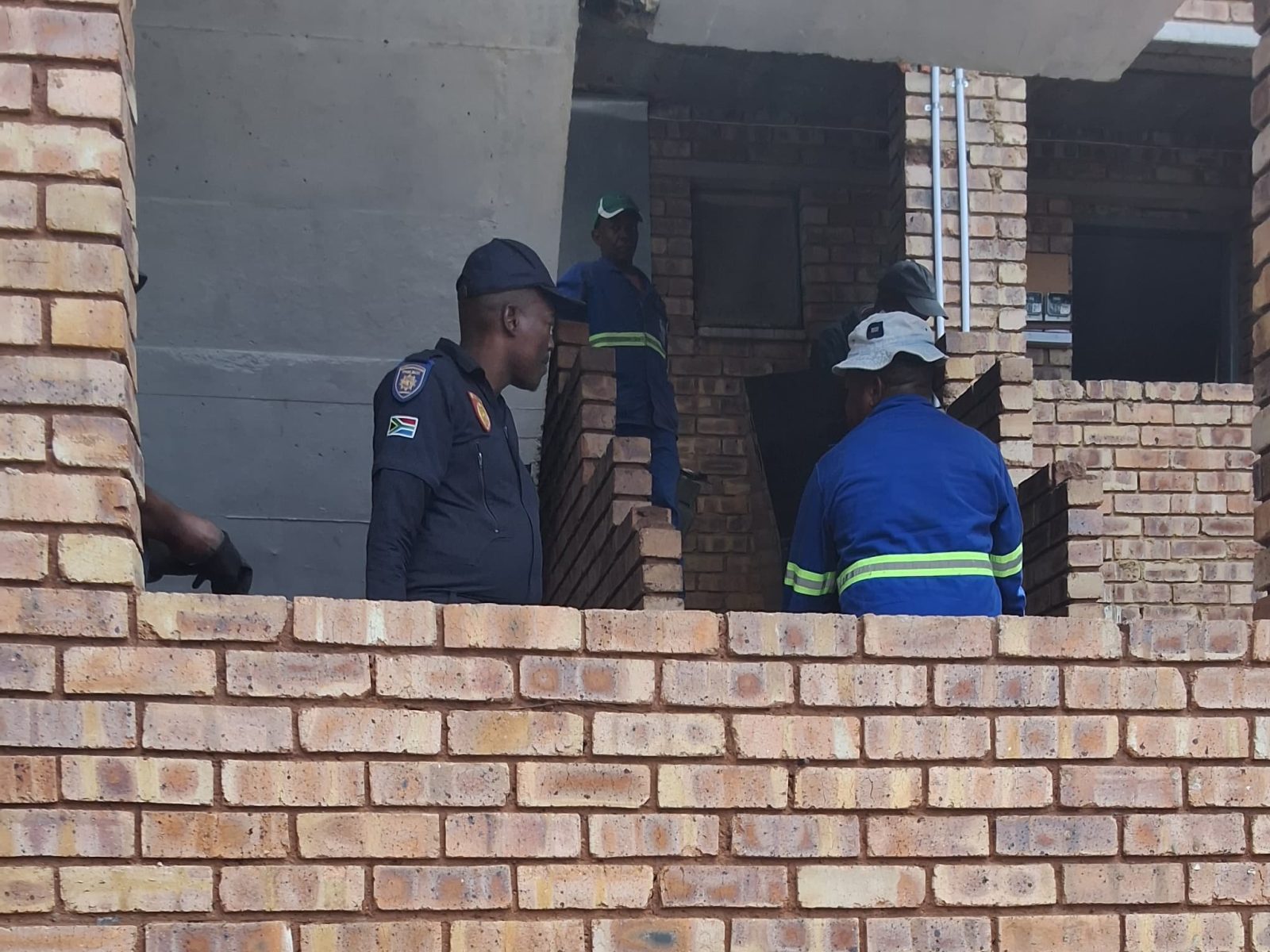
On Tuesday, a large team of city officials, Tshwane Metro Police Department officers, civil personnel and construction workers descended on the building, led by Mayoral Committee Member responsible for Corporate and Shared Services, Flora Monama, to evict the tenants.
After emptying the building, the team ripped out the doors and windows to render it uninhabitable.
“We are here enforcing the court order, firstly by evicting the tenants, which we have now concluded. The next step, as you can see, is to make it uninhabitable so that people don’t move in when we leave,” said Monama.
She said the structure was built defiantly from 2024, despite city officials warning Asaba that his project was not compliant with municipal building regulations and ordering him on multiple occasions to halt construction.
Monama said the city prefers to help developers, homeowners and businesses comply with building regulations and that demolition is always a last resort.
“We prefer to give people fines and help them comply with regulations, but in this particular case, the owner has consistently been defiant. We noticed the structure while it was still in the foundation phase and explained to the owner what needed to happen for the building to comply. But all those efforts were ignored, so the building kept rising from 2024, and now we have to bring it down,” she said.
Some of the evicted tenants said Asaba repeatedly misled them about his dealings with the municipality, consistently assuring them that everything was above board, even as he was losing the legal battle.
A woman who lived in a one-bedroom flat with her husband and two children said she grew increasingly suspicious last month when Asaba failed to reconnect essential services, such as water and electricity, as he had allegedly done whenever the city disconnected them.
“They lied to us each time water and electricity were cut off and said everything was okay and that the city had broken the law. We believed him many times, and he would restore the services, but this time he couldn’t, so some of us started looking for alternative accommodation,” she said on condition of anonymity.
Some tenants said they were attracted to the building by what they considered affordable rent, with a single-bedroom flat costing about R2,500 per month.
Monama said the city would not be able to demolish the building immediately because the operation would require funding as well as careful planning.
“Because it’s so high and surrounded by other houses, we have to be careful when demolishing it so that we don’t cause damage to the other houses. But definitely, as soon as we have the resources, this house will be flattened,” Monama said.
The crackdown forms part of the City of Tshwane’s Bad Buildings Programme, through which non-compliant structures, hijacked buildings and other properties deemed undesirable are targeted for clearance and, in some cases, demolition.
Little is publicly known about Asaba beyond his reported attempts to enter the property business, which have resulted in disputes with authorities over the compliance of his development.
Asaba could not be reached for comment.