





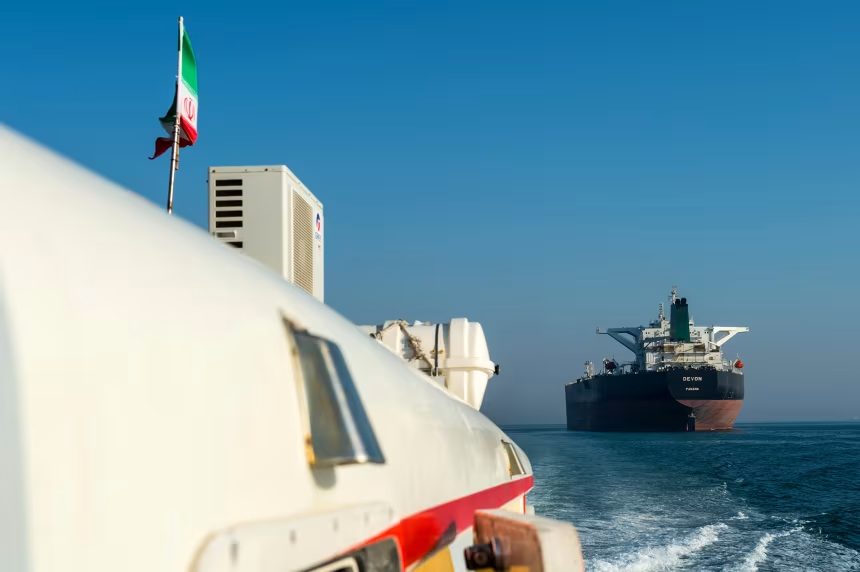
The U.S. Treasury Department has escalated its “maximum pressure” campaign against Iran, unveiling sweeping sanctions on over 115 individuals, entities, and vessels linked to the Tehran regime. Announced on Wednesday, this move marks the most consequential Iran-related sanctions since 2018, during the Trump administration’s first term, following a series of targeted airstrikes on key Iranian nuclear sites last month.
Central to this latest round of sanctions is Mohammad Hossein Shamkhani, son of Ali Shamkhani, an influential adviser to Supreme Leader Ayatollah Ali Khamenei. The Treasury alleges that Mohammad Shamkhani oversees a vast network of container ships and tankers that trade oil and goods between Iran and Russia globally. It claims he has amassed billions in profits—money perceived as supporting the Iranian regime through corruption and personal connections.
This sanction package targets an array of entities: 15 shipping firms, 52 vessels, 12 individuals, and 53 entities involved in evasion efforts across 17 countries, including Panama, Italy, and Hong Kong. A U.S. official stated that these measures are expected to further impair Iran’s capacity to sell oil internationally, despite current exports having already dropped from 1.8 million barrels per day at the start of the year to approximately 1.2 million.
While the U.S. official indicated that these sanctions would complicate Iran’s oil sales, they do not anticipate significant disruption to global oil markets. Nevertheless, the continuing pressure could reduce exports further, possibly mirroring the earlier success of sanctions which diminished Iranian oil flows to just a few hundred thousand barrels per day.
Iran responded with outrage, condemning the sanctions as a blatant example of hostility towards its citizens. Spokesperson Esmaeil Baghaei claimed these oil sanctions are malevolent acts designed to undermine Iran’s economic stability and living standards.
Notably, China remains the largest buyer of Iranian oil, raising questions about the efficacy of the U.S. sanctions in ultimately curtailing Tehran’s oil revenue. The European Union had previously sanctioned Mohammad Hossein Shamkhani in July for his involvement in the Russian oil sector, indicating an international consensus against key figures in Iran’s oil trade.
The implications of these sanctions extend beyond Iran. U.S. officials hinted at potential reverberations for Russia, although the primary focus remains resolutely on Iran. As tensions simmer, President Trump has issued stark warnings against any Iranian attempts to resume nuclear development, emphasising that such moves will be met with immediate and severe consequences.
Despite a willingness from Washington to resume dialogue with Tehran, the political landscape appears inhospitable for meaningful negotiations. Observers note that both Iranian and European diplomats are sceptical about the possibility of Iran revisiting discussions with the U.S., particularly in light of recent military actions and heightened tensions.


