




United Nations Security Council, Secretary-General Antonio Guterres declared that the prospects of a two-state solution between Israel and Palestine are nearing a critical point of irreversible decline. During the council’s quarterly open debate on the Middle East, Guterres painted a grim picture of escalating hostilities and humanitarian crises that threaten the very foundation of peace in the region.
Guterres’s address highlighted Israel’s ongoing blockade of crucial humanitarian aid, which has been withheld from the Gaza Strip for nearly two months. His remarks came in the wake of intensified military actions following the collapse of a ceasefire agreement in March, exacerbating the already dire conditions faced by the people of Gaza. He reiterated that both Israelis and Palestinians deserve the right to live in peace and security but stated that current realities are forcing these aspirations steadily further from reach.
“Today, the promise of a two-state solution is at risk of dwindling to the point of disappearance,” Guterres stated, emphasising the failure of political commitment towards achieving this long-standing objective. “As a result, the rights of both Israelis and Palestinians have been undermined, and the legitimate national aspirations of the Palestinians have been denied.” He underscored Israel’s continued presence in Palestinian territories, which has been deemed unlawful by the International Court of Justice (ICJ) and further complicated by the violent resurgence following the horrific Hamas attacks on October 7.
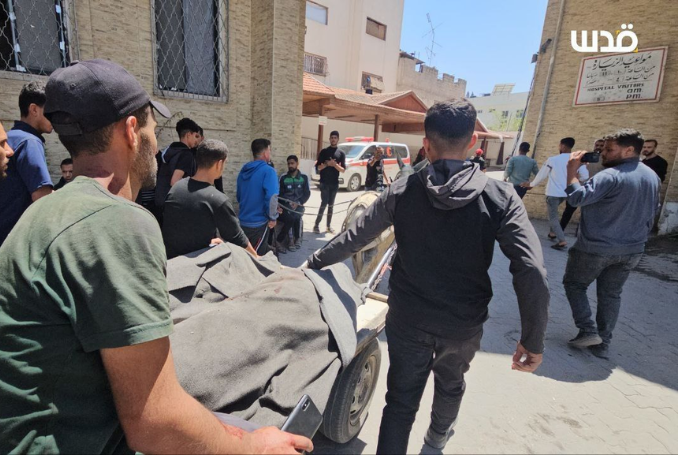
The situation in Gaza has become increasingly catastrophic, with Guterres noting the appalling humanitarian circumstances faced by its inhabitants, who are subject to relentless military operations that have resulted in spiralling civilian casualties. “Since the ceasefire was shattered on March 18, almost 2,000 Palestinians, including women, children, journalists, and humanitarians, have lost their lives due to Israeli military actions,” he lamented. “At the same time, Hamas continues to fire rockets indiscriminately into Israel, creating a vicious cycle of violence that deepens the crisis.”
Guterres also addressed rising tensions in the occupied West Bank, highlighting ongoing settlement expansions and escalating settler violence against Palestinians, which contribute to the evolving geography of the region. Calls for restraint were echoed, but the UN chief expressed grave concern that the international community appears paralyzed in effectively addressing these issues.
Central to Guterres’s discourse was a reference to the proceedings currently underway at the International Court of Justice concerning Israel’s legal obligations in the occupied territories. The UN has previously received an advisory opinion from the ICJ stating that Israel’s prolonged occupation is illegal; however, Israel has dismissed this verdict as a “decision of lies.” Guterres reiterated that all parties involved in the conflict must adhere to their obligations under international law, including the provision of essential food and medical supplies to the population as mandated. He underscored the necessity for Israel, as an occupying power, to facilitate humanitarian relief efforts and ensure the protection of aid workers.
“The world cannot afford to watch the two-state solution disappear,” Guterres urged. “Political leaders face clear choices — the choice to be silent, the choice to acquiesce, or the choice to act.” His remarks carry an unmistakable call to member states, pushing for an end to the violation of international law and urging concrete action to revive the prospects of peace before they slip away irretrievably into the annals of history.state solution risks geopolitical stability


