


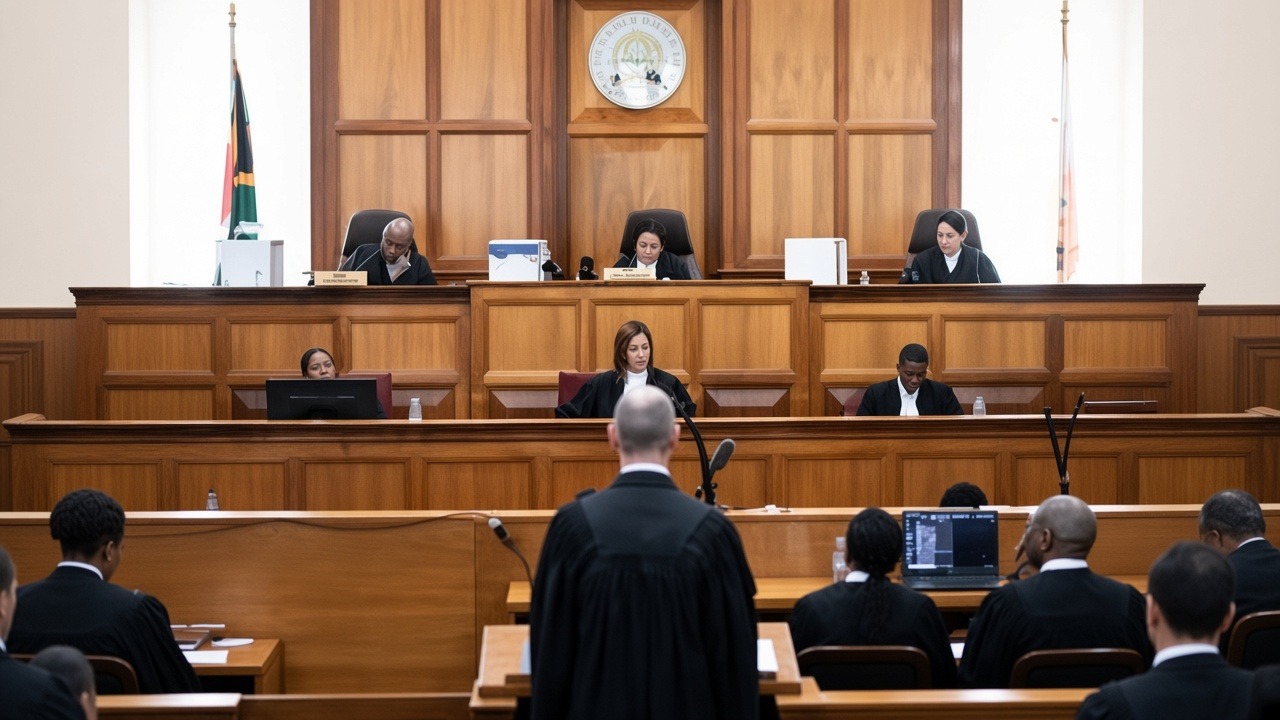
The Western Cape High Court has dismissed a legal challenge by the Economic Freedom Fighters (EFF) and the African Legal Professionals Association (ALPA) against Parliament’s decision to withdraw advocate Thandazani Madonsela’s recommendation as evidence leader in the Section 89 impeachment inquiry involving President Cyril Ramaphosa.
The ruling was delivered on Friday, 13 November 2026, by Judge Chantel Fortuin, who confirmed that the full bench was divided in its decision, with the majority judgment dismissing both applications.
The case centred on the Impeachment Committee’s decision to reverse its earlier recommendation of Madonsela for the position of evidence leader in the inquiry into allegations surrounding the theft of US dollars from President Ramaphosa’s Phala Phala farm.
EFF challenged committee’s decision
The EFF and ALPA had approached the court seeking to overturn the committee’s decision, arguing that its reversal of the recommendation was taken in bad faith.
The applicants questioned the circumstances surrounding the committee’s decision to withdraw Madonsela’s proposed appointment after initially recommending him for the role.
However, the committee defended its decision, arguing that concerns had emerged about a possible conflict of interest.
According to the committee, it was unaware that when Madonsela disclosed having provided legal advice to a parliamentary study group dealing with the impeachment matter, he was referring to the African National Congress (ANC).
The committee argued that this disclosure raised questions about a potential conflict of interest, prompting it to reconsider and rescind its earlier recommendation.
Full bench divided over the matter
Delivering the court order, Judge Fortuin explained that the full bench had produced two separate judgments.
While the majority dismissed both applications, the dissenting judgment concluded that the committee’s decision to reverse Madonsela’s recommendation should have been reviewed and set aside, with costs.
Fortuin confirmed that the full judgments, containing the detailed reasons behind the majority and dissenting positions, would be circulated to the parties.
Phala Phala inquiry faces further uncertainty
The legal dispute has added another development to the ongoing parliamentary process examining allegations connected to the Phala Phala farm controversy.
The Impeachment Committee has reportedly not convened for more than two months since the legal applications were initially launched against it.
The committee’s next steps and the implications of the court ruling will be closely watched as Parliament continues dealing with the Section 89 inquiry involving President Ramaphosa.
For now, the majority judgment means the EFF and ALPA have not succeeded in overturning the committee’s decision to withdraw Madonsela’s recommendation.