



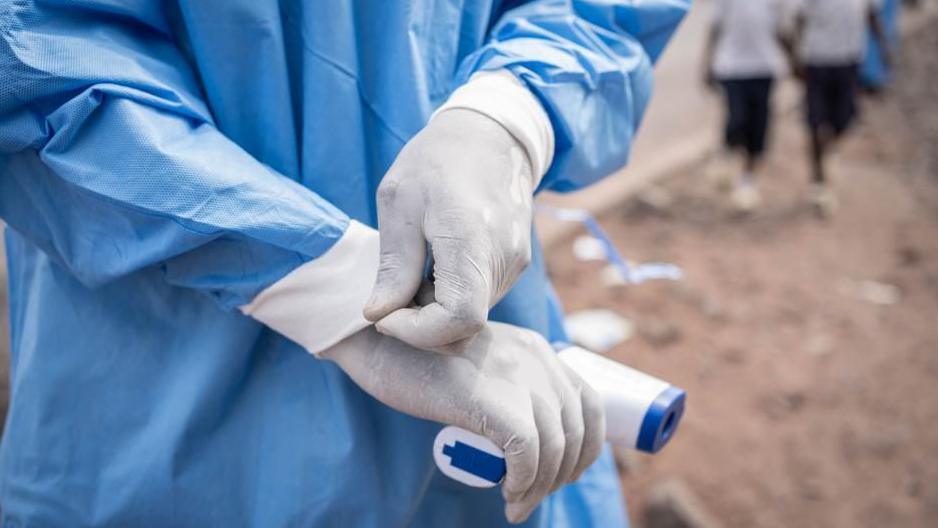
The World Health Organization (WHO) has noted progress in the fight against the Ebola virus in the Democratic Republic of the Congo (DRC), despite the virus continuing to spread to other regions.
The virus is transmitted through contact with infected bodily fluids and can cause severe internal and external bleeding, as well as organ failure.
“I have said before that the Ebola epidemic in the Democratic Republic of the Congo had a big head start and we’re playing catch-up in the response.
“We’re now starting to see encouraging signs that we’re gaining ground. In the most affected parts of Ituri province, transmission is going down,” said WHO Director-General Dr Tedros Adhanom Ghebreyesus during a media briefing in Geneva, Switzerland.
He said the health agency was encouraged by the fact that South Kivu had reported no new cases since May, while more than 1,700 people had recovered.
Ghebreyesus highlighted that, for the first time in four months, the epidemic had been contained largely in northeastern DRC, apart from a small outbreak in Uganda that was swiftly contained.
He attributed the progress to measures implemented by the government, close cooperation between the WHO, the Africa Centres for Disease Control and Prevention (Africa CDC), and hundreds of partners, as well as the efforts of thousands of health workers and frontline responders.
Despite the milestone, Ghebreyesus warned against complacency, saying the virus continued to spread and claim lives.
“More than 7,200 cases have been reported and over 3,500 deaths across seven provinces.
“Although there are signs of reduced transmission in Ituri, it’s reducing from a high level.
“In the past week alone, around 300 new cases and 160 deaths were reported from Ituri, accounting for half the national total.
“In North Kivu, cases are rising fast.”

