



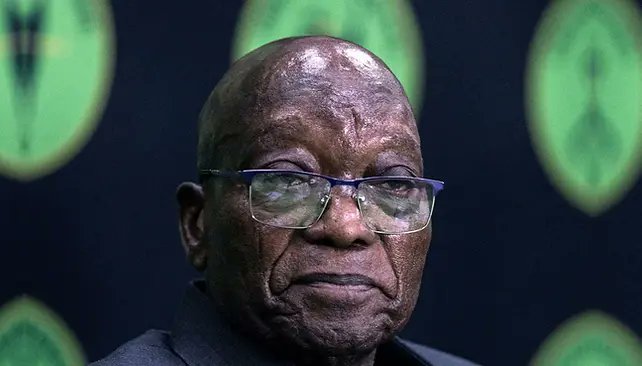
Former President Jacob Zuma’s highly anticipated testimony before the TRC Cases Inquiry has been deferred to an unconfirmed date.
The Judicial Commission of Inquiry into Allegations Regarding Efforts or Attempts to Stop the Investigation or Prosecution of Truth and Reconciliation Commission Cases confirmed the postponement following an agreement reached between the commission and Zuma’s legal representatives. Zuma was originally scheduled to take the stand on Thursday, 22 October 2026.
While Zuma’s appearance hangs in the air, the commission confirmed that proceedings will continue as planned for other high-profile witnesses. Former President Thabo Mbeki is still scheduled to give his testimony across two days on Monday and Tuesday.
The Context: Why This Inquiry Matters
To understand why this media alert is significant, it helps to look at the history and the high stakes surrounding the commission.
1. What is the TRC Cases Inquiry?
The Truth and Reconciliation Commission (TRC) was established in the 1990s to investigate gross human rights violations committed during Apartheid. While the TRC recommended that the National Prosecuting Authority (NPA) prosecute roughly 300 cases where perpetrators were denied or failed to apply for amnesty, decades passed with very little legal action taken.
Families of the victims argued that post-apartheid governments actively blocked these investigations. Following a legal settlement with victims’ families, President Cyril Ramaphosa established this specific Judicial Commission of Inquiry in May 2025. Led by retired Constitutional Court Justice Sisi Khampepe, its sole purpose is to investigate whether state officials or political figures deliberately interfered with or suppressed the prosecution of these apartheid-era crimes.
2. The Legal Battle Before the Hearings
Both former presidents, Thabo Mbeki and Jacob Zuma, initially resisted appearing before the commission. They launched a joint legal challenge demanding that Justice Khampepe recuse herself, citing an apprehension of bias due to her past roles in the original TRC amnesty committee. However, the Constitutional Court dismissed their application, exhausting their legal options and forcing both statesmen to face the inquiry.
3. Why Did Zuma Defer?
Reports indicate that the deferment follows Jacob Zuma’s recent admission into a hospital in Pietermaritzburg for routine medical check-ups. Because Zuma is also actively leading the uMkhonto weSizwe (MK) Party ahead of local government elections, his health and legal availability have tightly compressed his schedule.
4. What is Mbeki’s Stance?
Unlike Zuma’s deferred status, former President Thabo Mbeki has already submitted documentation fiercely denying any political interference during his administration. Mbeki argues that his creation of the Priority Crimes Litigation Unit in 2003 was meant to process these exact cases, shifting the blame for the multi-decade delays entirely onto the shoulders of the NPA.
The commission is currently under pressure to wrap up its historic mandate, as President Ramaphosa extended its absolute deadline to 18 December 2026, making the upcoming testimonies from South Africa’s former heads of state critical to its final report.

