


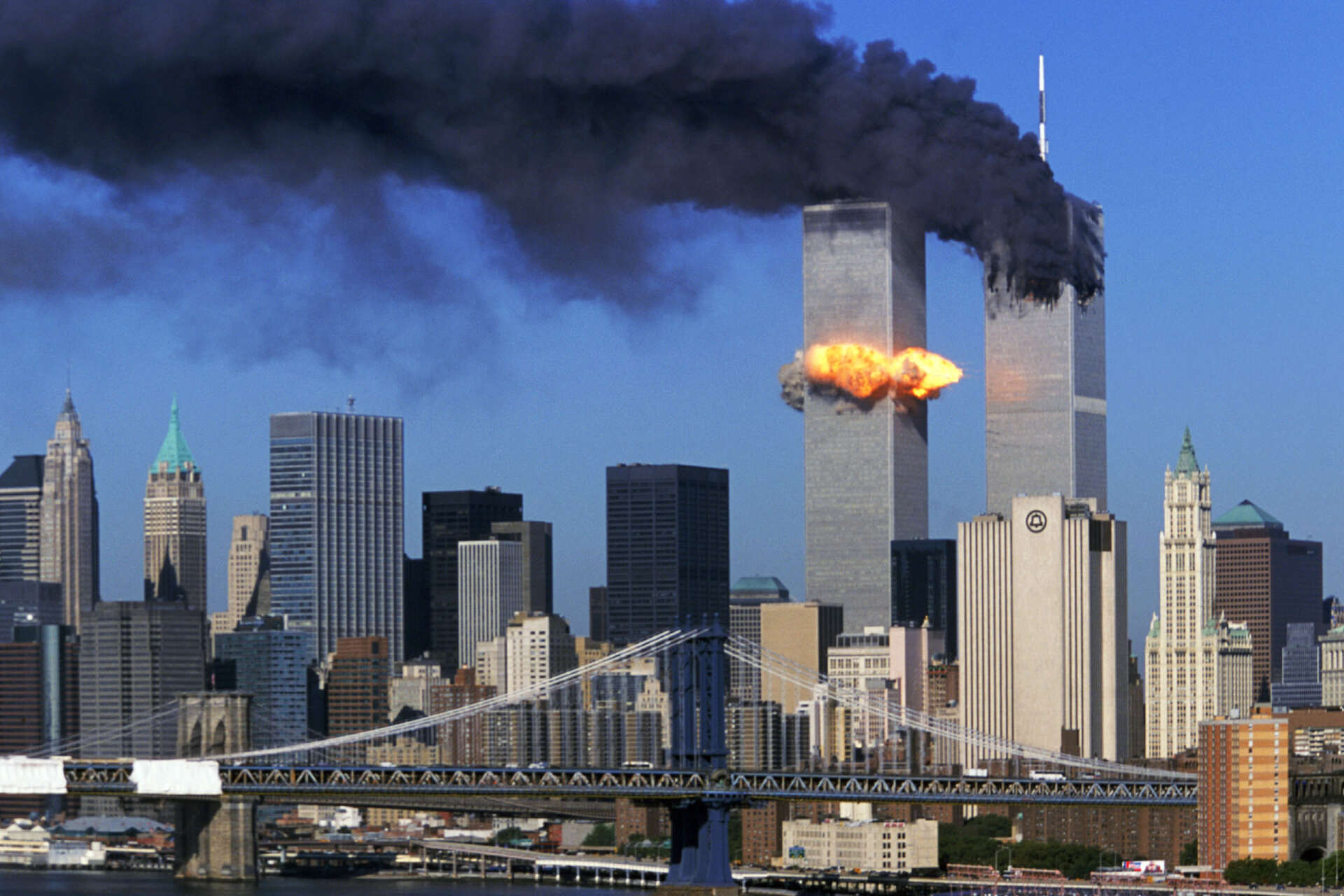
Twenty-five years after the 11 September 2001 terrorist attacks, families, survivors, first responders and communities across the United States and beyond are gathering to remember the nearly 3,000 people who lost their lives.
Memorial services are being held across the US and the UK to mark the anniversary of the attacks, which transformed global security, foreign policy and the lives of millions of people.
On the morning of 11 September 2001, 19 al-Qaeda hijackers took control of four commercial aircraft. Two planes were flown into the World Trade Center towers in New York, while another struck the Pentagon in Virginia.
The fourth aircraft, United Airlines Flight 93, crashed into a field near Shanksville, Pennsylvania, after passengers and crew attempted to regain control of the plane.
In total, 2,977 people were killed, excluding the 19 hijackers. The victims included passengers and crew aboard the four aircraft, workers at the World Trade Center and Pentagon, and hundreds of emergency responders.
People from more than 90 countries were among those killed.
A day that changed the world
The attacks triggered a sweeping transformation in international security and foreign policy.
The United States launched its “war on terror”, beginning with military action in Afghanistan against al-Qaeda and the Taliban. The attacks also led to major changes in intelligence gathering, airport security, counter-terrorism operations and international cooperation.
Twenty-five years later, security officials say the threat landscape has changed significantly.
MI5 Director General Sir Ken McCallum has described the attacks as a defining moment, arguing that the lessons of 9/11 remain relevant as governments confront new and evolving security threats.
He has stressed the importance of preparation, resilience and adapting to emerging threats rather than relying solely on the lessons of the past.
The hidden health cost
For many survivors and first responders, the consequences of 9/11 did not end when the towers fell.
Thousands of people who were exposed to dust, smoke and debris at Ground Zero have since developed serious illnesses. US health authorities say deaths from 9/11-related diseases have now exceeded the number of people killed on the day of the attacks.
Among those affected are firefighters, police officers, rescue workers and civilians who spent time at or near the site.
Newly released records have also renewed scrutiny of the response to air-quality concerns in the aftermath of the attacks, including the presence of asbestos and other hazardous substances around Ground Zero.
The issue has become an important part of this year’s anniversary commemorations, highlighting the long-term consequences faced by those who survived the initial attacks.
Remembering the victims
In New York, memorial events are taking place at the site of the former World Trade Center.
The annual ceremony includes the reading of victims’ names and moments of silence marking the key moments of the attacks.
This year, an additional bell is being used to recognise those who later died from illnesses linked to 9/11.
In London, families, first responders and schoolchildren have gathered at the 9/11 Memorial Garden in Queen Elizabeth Olympic Park.
US Ambassador Warren Stephens also paid tribute at the memorial in Grosvenor Square, remembering the 67 British citizens who were killed in the attacks.
Political leaders across the UK have also marked the anniversary.
Scotland’s First Minister John Swinney said Scotland stood with the United States in remembering those who lost their lives, while Prime Minister Andy Burnham paid tribute to the victims and their families.
A new generation remembers
A quarter of a century after the attacks, one of the challenges facing those commemorating 9/11 is ensuring that its history is understood by generations who were not alive when it happened.
Many of those attending memorial events today were either children or had not yet been born in 2001.
For survivors and families of victims, however, the memories remain deeply personal.
Their experiences continue to shape how the attacks are remembered — not simply as a moment of terrorism, but as a human tragedy whose consequences continue to be felt a generation later.
Twenty-five years on, the anniversary serves as both a commemoration of those who died and a reminder of the enduring impact of one of the defining events of the 21st century.