



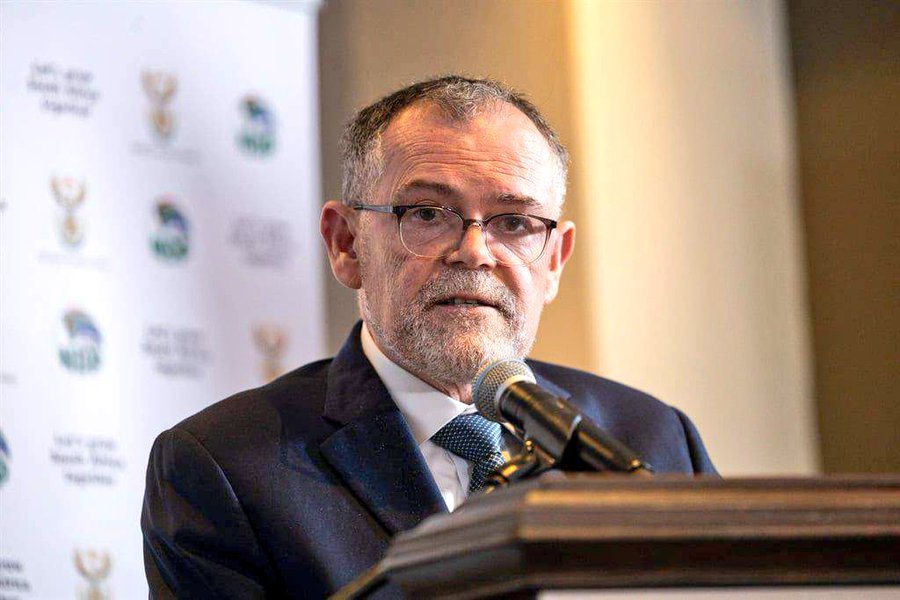
Democratic Alliance (DA) leader John Steenhuisen is likely to face reduced internal scrutiny following the resignation of his long-time critic, Dion George, from the party.
George, the former Minister of Forestry, Fisheries and the Environment, announced his resignation from the DA on Thursday during an interview with eNCA, describing the situation within the party as “intolerable”.
“The situation has become intolerable. I am being pushed out and it is no longer feasible for me to remain in the party,” George said. He claimed he learned through the media on 7 November 2025 that Steenhuisen had written to President Cyril Ramaphosa requesting his removal from Cabinet while he was representing South Africa at COP30 in Brazil.
George was subsequently dismissed from Cabinet, with Steenhuisen citing incompetence and nepotism at the time.
“I cannot remain in a party that has, through the actions of its current leader, been captured by the African National Congress (ANC) and other criminal interests,” George said. “As a result, the DA has been completely muzzled and has lost its ability to lead in South Africa’s interests.”
George further alleged that criminal cartels operating within the wildlife sector exert influence over political decisions and claimed he had previously been pressured by Steenhuisen to cooperate with these interests in ways he regarded as potentially unlawful. These allegations have not been proven.
Responding to George’s resignation, DA Federal Chairperson Helen Zille suggested that his departure was an attempt to evade accountability.
“It is unfortunate that Dr Dion George has resigned before answering a pending disciplinary investigation by the DA Federal Legal Commission on allegations levelled against him,” Zille said in a statement.
According to Zille, George was expected to respond to allegations that included:
- Staff appointments in his ministerial office that allegedly resulted in unjustified salary increases at public expense;
- The alleged use of departmental information for internal party political purposes; and
- Bringing the party into disrepute through media engagements.
In his resignation statement, George said South Africa requires a “strong, clear and uncaptured” opposition voice.
“The DA could have been that voice, even within the Government of National Unity (GNU), but that required uncorruptible leadership,” he said.
George called on DA members to remove Steenhuisen as party leader, arguing that the party’s participation in the GNU could have succeeded under different leadership.
“It is still my view that, with skilful leadership and a firm commitment to integrity, the DA’s participation in the GNU could have worked,” he said. “Instead, Steenhuisen has allowed himself to be captured due to personal financial vulnerabilities.”
George’s resignation is widely viewed as strengthening Steenhuisen’s bid for a third term as DA leader. George had been one of the most vocal internal figures calling for accountability over past controversies involving Steenhuisen, including the use of the party’s credit card and a court judgment related to an unpaid R150,000 credit card debt—matters for which Steenhuisen has previously been cleared by the DA.
With George no longer in the party, critics suggest that internal pressure for further accountability on these issues may now subside.