


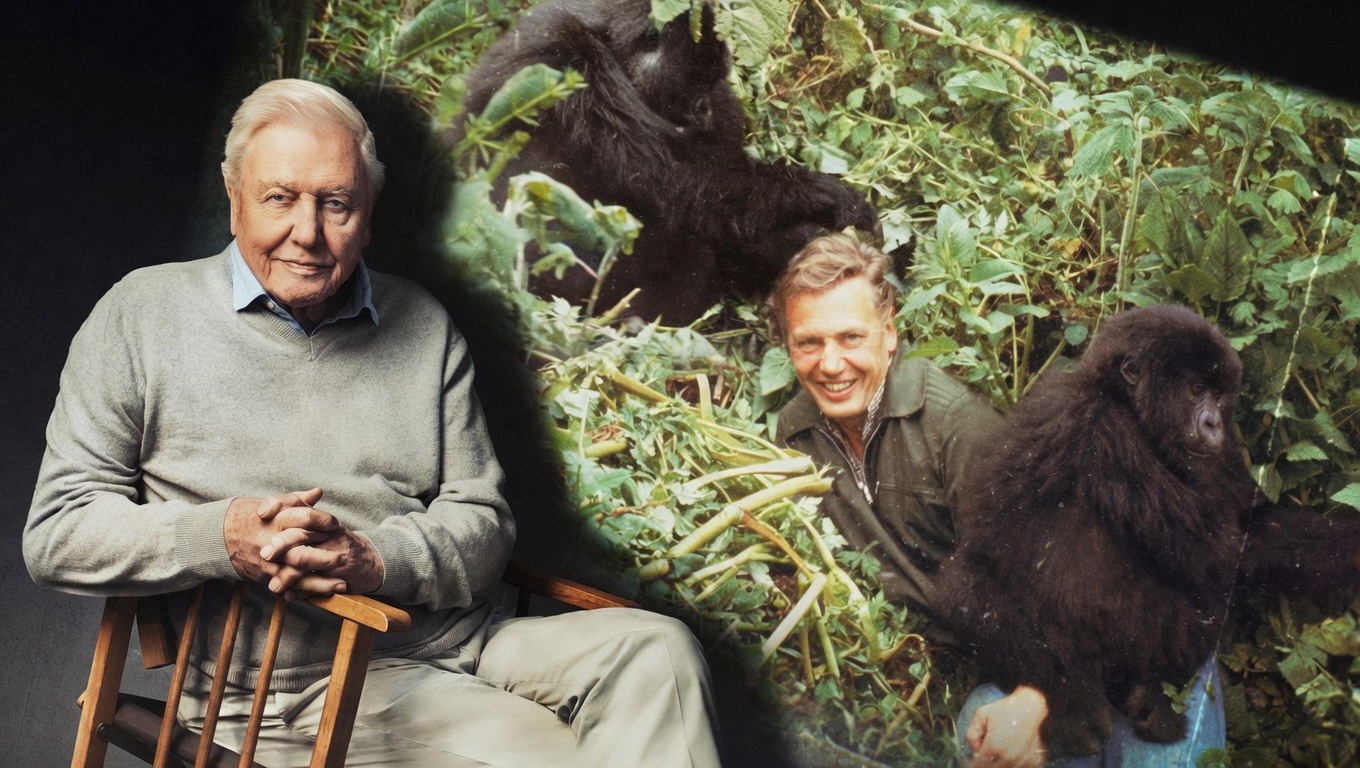
Sir David Attenborough has shaped how the modern world understands nature, conservation, and humanity’s place within the Earth’s ecosystems. Across more than seven decades of broadcasting, David Attenborough has become a defining figure in environmental storytelling, transforming natural history from niche scientific documentation into a global cultural force.
Historically, Attenborough’s significance begins in the post-war expansion of public broadcasting in Britain. As television became a mass medium in the mid-20th century, he recognised its potential not merely as entertainment, but as an educational tool. Through landmark productions such as Zoo Quest in the 1950s and later the Life series, he helped establish a new genre: immersive natural history filmmaking grounded in scientific observation. This approach reshaped public understanding of biodiversity at a time when ecological science was still developing in the public imagination.
A central pillar of Attenborough’s work has been Africa, both as a filming location and as a narrative centre of biodiversity. From the savannahs of East Africa to the rainforests of Central Africa, his documentaries have repeatedly showcased the continent’s ecological richness and complexity. Productions featuring ecosystems such as the Serengeti, the Congo Basin, and Madagascar have highlighted Africa not as a peripheral backdrop, but as a critical heart of global biodiversity. These portrayals have helped elevate international awareness of African conservation challenges, including poaching, habitat loss, and climate vulnerability, while also celebrating the continent’s extraordinary species diversity.
However, this African focus also invites reflection on the broader history of natural history filmmaking. Earlier decades of wildlife documentaries often relied on external narration of African environments, sometimes criticised for presenting nature as distant or untouched by human influence. Over time, Attenborough’s later work has increasingly acknowledged human presence and environmental pressure, reflecting a shift toward more locally integrated and scientifically grounded storytelling.
The global significance of Attenborough’s work lies in his ability to connect ecosystems across continents into a single narrative of interdependence. Whether documenting coral reefs in the Pacific, rainforests in South America, or savannah ecosystems in Africa, his message has consistently emphasised that environmental systems are interconnected and fragile. This framing has been instrumental in shaping modern climate consciousness, particularly as climate science moved from academic circles into mainstream political discourse.
In the 21st century, Attenborough’s tone has become more urgent, particularly in productions such as Blue Planet II and A Life on Our Planet. He now speaks not only as an observer of the natural world, but as a witness to its rapid transformation. This shift reflects a broader historical turning point in environmental communication: from celebration to warning, from documentation to advocacy.
Critics have debated whether his storytelling approach is sufficient to drive structural environmental change. While his work has undeniably influenced public awareness, policy outcomes remain uneven. Yet this critique may overlook the historical importance of awareness itself. Before environmental policy can be enacted, societies must first recognise environmental loss as real, urgent, and shared. Attenborough’s contribution lies precisely in that foundational stage of global consciousness-building.
Ultimately, his legacy is both historical and ongoing. He represents a bridge between early natural history broadcasting and contemporary climate communication. His work has helped position Africa at the centre of global ecological understanding, while also reframing humanity’s relationship with the planet as one of responsibility rather than dominance.
As environmental challenges intensify, Attenborough’s influence endures not as a conclusion, but as a starting point—one that has permanently changed how the world sees itself within nature, rather than apart from it.