



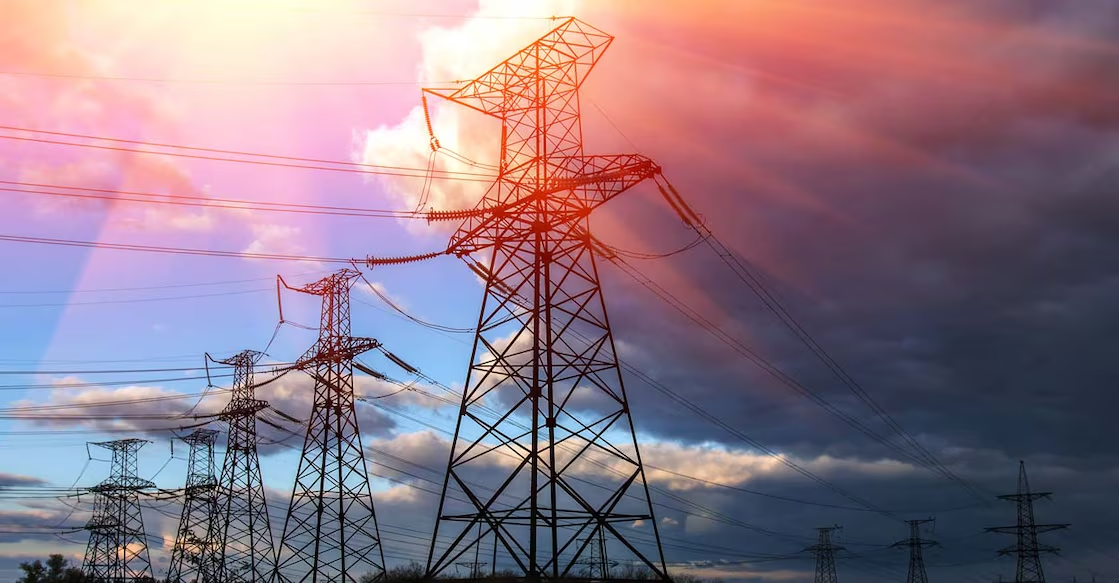
Load reduction set to end soon in Gauteng and KwaZulu-Natal
Electricity Minister Sputla Ramokgopa has vowed to fulfil his commitment to end load reduction in Gauteng and KwaZulu-Natal, the only two provinces where the measure is still being implemented.
The two provinces, which are South Africa’s most populous, continue to experience load reduction, while the remaining seven provinces have been freed from the measure.
Briefing the media in Pretoria on Wednesday, Ramokgopa said his department was working closely with municipalities to ensure they had the infrastructure needed to meet growing electricity demand.
“We have kept up to our promise to the country. We’ve eliminated load reduction in seven of the nine provinces. We’re left with two provinces, Gauteng and KZN, and we’re working at pace to resolve that problem.
“So what are we doing? The long-term plans, we’re working very closely with municipalities to project what demand will look like and ensure that we’ve got sufficient capacity, enough headroom, to support that growth,” Ramokgopa said.
The minister explained that load reduction was necessary to protect local electricity infrastructure from being overwhelmed, particularly in rapidly growing urban areas.
He said rising electricity demand, illegal connections and the expansion of informal settlements had placed significant pressure on municipal infrastructure, which had not always kept pace with population growth.
“Load reduction [is a] local infrastructure failure problem, and it’s a function of the growth of electricity demand in a particular area as a result of illegal connections and the proliferation of informal settlements, and the inability of the municipalities to plan going into the future.
“And therefore, the infrastructure capacity is not able to keep up with that growth in demand, and that results in load reduction because what the municipalities and Eskom will typically do is to deny the users their right to electricity during the peaks because that threatens the integrity of the infrastructure, can result in damage, explosions and, in some instances, loss of life.
“So to protect the system, to protect the people, then they say load reduction,” he said.
Infrastructure upgrades needed
Ramokgopa acknowledged that eliminating load reduction would require significant investment in electricity infrastructure.
He warned that failing to upgrade the network would not only leave communities without reliable access to electricity but could also encourage further illegal connections.
“It’s going to take a lot of money. These transformers, on average, [cost] R500,000. You have to get the money, the capital, to be able to roll it out.
“We accept that if you don’t roll out that programme, you are going to continue to have situations where people don’t have access to electricity. You are going to, in fact, fuel illegal connections,” he said.
The minister said consultations with residents of informal settlements had shown that many were willing to pay for electricity if they were formally connected to the grid.
“In many areas where I am personally involved in ensuring that we address the illegal connections, people do come out to say, look, indeed, we accept that we are guilty of connecting illegally, but we’ve been making calls to Eskom, we’ve been making calls to municipalities to please formalise us. We are prepared to pay.
“You will see there is a relationship between where we have ended with the reduction and the increase in connections,” Ramokgopa said.