





The Airports Company South Africa (Acsa) has marked a significant turnaround in its financial fortunes, more than doubling its profit after tax from R472 million to R1.1 billion for the financial year ending March 2025. This notable achievement underscores the company’s robust recovery from the COVID-19 pandemic and signals a revitalisation of investor confidence in the state-owned enterprise.
Speaking in Kempton Park, Ekurhuleni, Acsa CEO Mpumi Mpofu presented the annual financial results, expressing a nuanced view of the fiscal landscape. “Our performance this year has been a story of contrasts, strong financial delivery on one hand, and operational headwinds on the other. It has demanded from us commercial discipline, executional rigour, and also humility and renewed accountability,” Mpofu remarked.
Despite the positive financial performance, Acsa is grappling with challenges connected to fuel security, especially in light of South Africa’s reliance on imported fuel. Mpofu highlighted the risks posed by this dependency, particularly after the National Petroleum Refiners of South Africa (Natref) suffered a fire in January, exacerbating supply chain disruptions.
“So when there are service disruptions around that import chain, it impacts us. We normally say the only sin we have as Acsa is that we are the biggest consumer of 3.5 million litres a day. If the market cannot supply us 3.5 million litres a day, that is what you see as disruption,” she explained.
In December 2023, Acsa experienced a significant fuel shortage incident at O.R. Tambo International Airport due to “preventable fuel supply delays,” which severely disrupted flight operations. To mitigate such future risks, the company has proactively increased its jet fuel storage capacity to a ten-day supply and implemented vital upgrades to its fuel infrastructure, including a new 18-inch pipeline.
Mpofu detailed how enhancements to the fuel supply system would work: “Basically, it’s a new system that would have bypassed the particular valve that was problematic at the time the incident occurred. So that was the first exercise. The second part is that we had to do what’s called an 18-inch line, which is a replacement of a second jet fuel line. If there’s a system failure on one, we click to the other.”
Additionally, Acsa has proposed expansions to fuel storage tanks at key airports to further mitigate risks associated with fuel supply shortages. The company’s long-term strategy emphasises resilience, sustainability, and digitisation, incorporating projects aimed at improving both operational efficiencies and the passenger experience.
“This marks a sharp improvement from 2023/24, when total dividends amounted to R815 million, comprising R768 million for preference shares and R47 million for ordinary shares,” said Chief Financial Officer Luzuko Mbotya. “The year-on-year growth in ordinary dividends reflects not only Acsa’s stronger balance sheet but also the company’s sustained recovery and renewed capacity to deliver value to shareholders.”
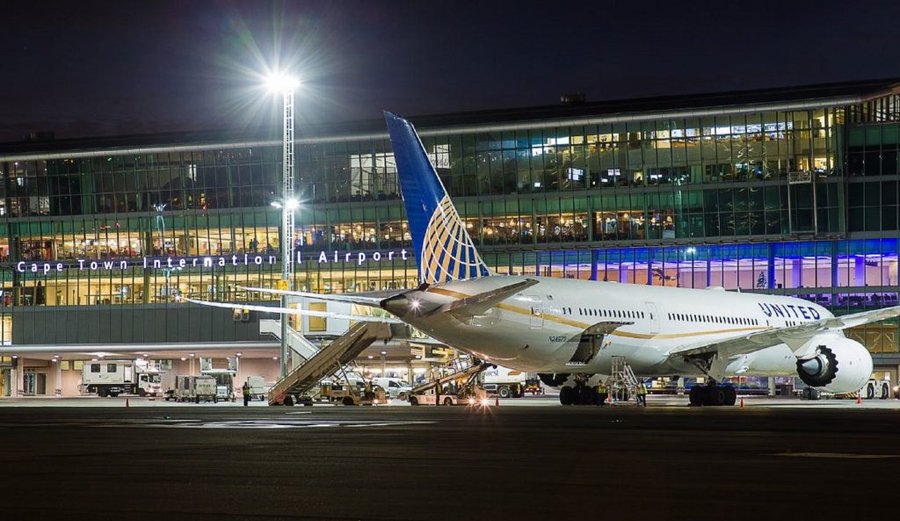
With a capital expenditure rise to R861 million, Acsa is aggressively investing in infrastructure renewal, planning to earmark R21.7 billion for capital projects over the next five years. Flagship upgrades are scheduled for O.R. Tambo International, Cape Town International, and several regional airports, indicating a clear commitment to enhancing the country’s aviation infrastructure.


