



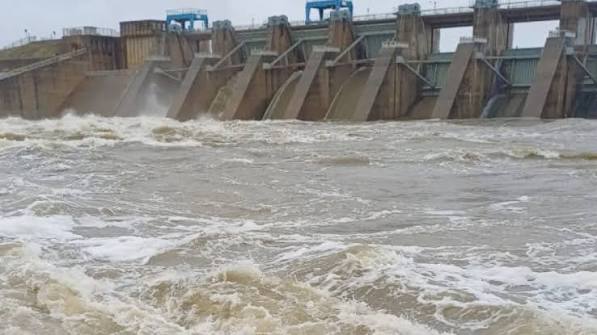
The Department of Water and Sanitation has reassured farmers, water users and other stakeholders affected by upstream slope damage at Bloemhof Dam in the North West that there will be no disruption to water supplies or flooding downstream ahead of a major water release.
The department has begun lowering the dam level to enable engineering teams to safely commence rehabilitation work.
The leader of the engineering team overseeing the rehabilitation of the dam, Motebele Moshodi, told YOU FM Newshour that a coordinated plan was being implemented to ensure there was no interruption to water supplies.
“At this current moment, there is an exceptionally low probability that there would be an interruption in supply to any of the users who depend on Bloemhof Dam. I think we have carefully considered that approach.
“We understand the impact, as many farmers are entering the production season and water is already an issue in some municipalities. We have therefore carefully considered the approach to minimise the impact as much as possible.
“But at this point, I can safely say there is an exceptionally low probability that we will interrupt water supplies,” said Moshodi.
According to Moshodi, rehabilitation assessments and repair work at the dam can only begin once a dry working area has been created.
“A contractor is already on site and is undertaking the necessary maintenance preparations under the direct guidance of departmental experts.
“While monitoring dam safety issues at Bloemhof Dam, dams in the integrated Vaal River System are being operated at elevated levels to ensure water security in the system,” Moshodi said.
Meanwhile, the department said it would steadily release water to lower the dam level to its full supply level of 100%.
“This was done with consideration for the need to manage floods when they present themselves in the system,” the department said in a statement.
Bloemhof Dam is currently at 109%.
Moshodi said further analyses were under way to establish the dam level at which dam safety, water security and flood management could be balanced.
He assured communities that the amount of water being released would not cause flooding downstream.
“That is something we had to consider because, in some situations, if you were not mindful of the downstream impact, you could immediately lower the dam and almost empty it.
“But obviously, with the potential impact downstream, we must be mindful of that and carefully consider the approach we are taking.
“So, the 400 m³/s (cubic metres per second) that we are releasing was not released all at once. We started at 100 cubic metres per second and steadily increased it to 400,” explained Moshodi.
The department reaffirmed its commitment to transparent communication, stakeholder engagement and providing regular updates as the maintenance programme progresses.

