


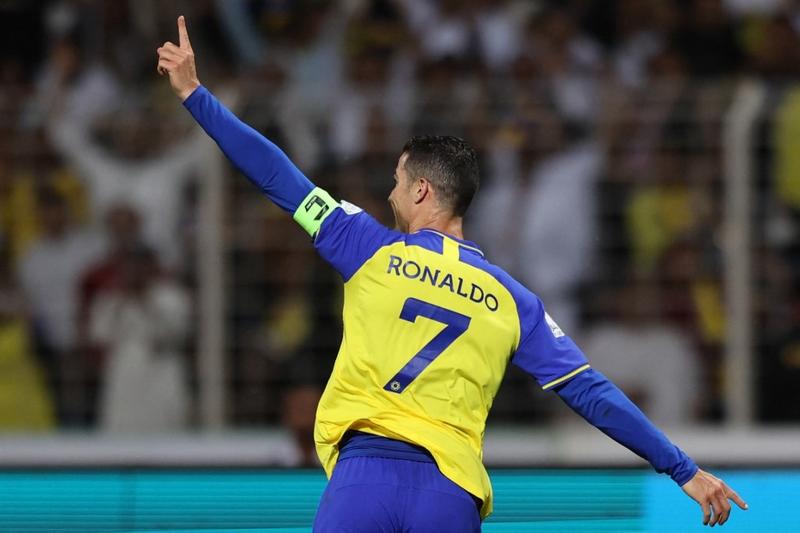
Cristiano Ronaldo is preparing to begin his 25th senior club season, another remarkable milestone in a career that has stretched across more than two decades and several generations of football.
The 41-year-old Portuguese forward is set to continue with Al Nassr after building one of the most decorated careers in modern football. While much of the discussion around Ronaldo has traditionally focused on his goals and trophies, his ability to remain productive at an age when most elite players have already retired has become one of the defining features of his career.
Ronaldo began his senior club career with Sporting CP during the 2002-03 season before moving to Manchester United, where he developed into one of the most exciting young players in world football. His career subsequently took him to Real Madrid, Juventus and back to Manchester United before he moved to Saudi Arabia to join Al Nassr.
More than 20 years after his professional debut, Ronaldo remains a major attacking threat. During the 2025-26 Saudi Pro League season, he scored 28 goals in 30 appearances, according to official league statistics.
Those figures are significant because Ronaldo’s longevity has not simply involved extending his playing career. He continues to produce goals and play an important role for his club.
His ability to maintain that level has required a significant transformation in his playing style. The Ronaldo who emerged at Manchester United was an explosive winger capable of beating defenders with speed, dribbling and changes of direction. During his time at Real Madrid, he developed into an even more complete attacking player and became one of the most prolific goalscorers in the history of the game.
As he has aged, however, Ronaldo has increasingly moved towards a central role. His game now relies more heavily on movement, positioning, anticipation and finishing, allowing him to conserve energy while remaining dangerous in and around the penalty area.
That evolution has been crucial to his longevity.
Rather than attempting to play exactly as he did in his early 20s, Ronaldo has adapted his game to meet the demands of an ageing body. His career demonstrates how elite athletes can extend their careers by changing the way they contribute rather than simply trying to preserve their physical abilities indefinitely.
Ronaldo’s achievements across his career provide further context to his longevity. With Manchester United, he won the Premier League and Champions League, while his time at Real Madrid produced multiple Champions League titles and Ballon d’Or awards. He also continued to score at an exceptional rate during his spell at Juventus before returning to Manchester United and later joining Al Nassr.
His international career has been equally significant. Ronaldo has been the face of Portugal for more than two decades and helped the national team win Euro 2016 and the UEFA Nations League in 2019.
He has also become a bridge between different generations of footballers. When Ronaldo began his senior career, many of the players he now competes alongside were not yet old enough to follow professional football. More than two decades later, some of those players grew up watching him as one of the sport’s biggest stars.
That generational connection illustrates just how long Ronaldo has remained at the centre of the football conversation.
His longevity can also be compared with that of NBA superstar LeBron James, who is preparing for another season at an age when most professional athletes have long since retired.
Although football and basketball place different physical demands on athletes, both Ronaldo and James have demonstrated the importance of adaptation. Neither athlete performs exactly as they did in their 20s, but both have developed new ways of influencing their respective sports.
For Ronaldo, that has meant becoming increasingly efficient in front of goal. His movement and positioning allow him to remain influential without constantly relying on the explosive physical attributes that characterised the early part of his career.
There have been questions about whether playing in Saudi Arabia represents a different level of competition from the European leagues where Ronaldo spent much of his career. However, his continued scoring record and ability to attract global attention mean he remains one of the most recognisable figures in world football.
At this stage of his career, another major objective is the pursuit of 1,000 career goals, a milestone that would add another remarkable achievement to an already extraordinary list of records.
The question of retirement will inevitably become more prominent as Ronaldo enters another season at 41. However, his continued involvement with Al Nassr suggests that he is not yet ready to bring his playing career to an end.
Ronaldo’s eventual retirement will mark the conclusion of one of the longest and most successful careers in modern football. By then, his legacy will be measured not only by the trophies, records and goals he accumulated, but also by his ability to adapt to the changing demands of the sport.
His greatest achievement may ultimately be the consistency with which he has remained relevant. From a teenage prospect at Sporting CP to a global superstar at Real Madrid and now an experienced leader at Al Nassr, Ronaldo has repeatedly reinvented himself.
At 41, he is still preparing for another season, still scoring goals and still attracting attention from football supporters around the world. For a player who began his senior career in 2002, that continued relevance may be the clearest indication of just how extraordinary his career has been.