



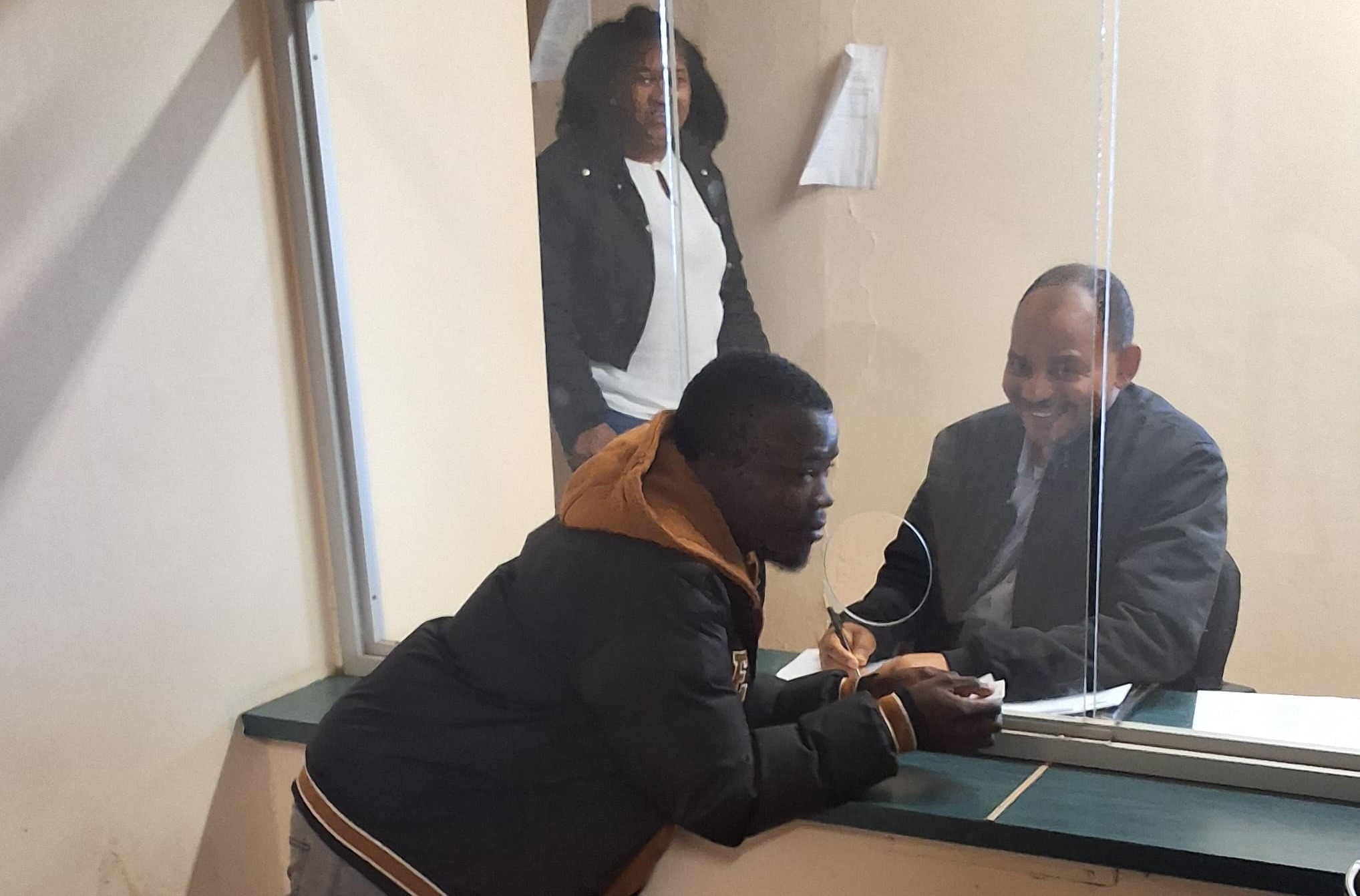
The Chief Director of Immigration Enforcement at the Department of Home Affairs, Stephen van Neel, has expressed frustration over the lack of cooperation from some African embassies, which are failing to provide the necessary travel documents required to deport their citizens from South Africa.
This emerged during a visit to the Lindela Repatriation Centre by three judges from the Johannesburg High Court, led by Gauteng Judge President Aubrey Ledwaba. The visit formed part of a case in which pro-migrant non-governmental organisations (NGOs) are seeking an order preventing the Department of Home Affairs from detaining undocumented foreign nationals beyond the legally prescribed period of 120 days.
Van Neel said South Africa could not simply deport individuals without confirmation from the receiving country that they were indeed its nationals.
“As we speak now, what is required in terms of that deportation process is that we need to engage the embassies. The embassy would come here and confirm that this individual is indeed a national of their country. So we cannot just take people from here to a country they are not necessarily from,” he said.
Van Neel explained that the verification process was essential because some undocumented individuals claimed to be from particular countries, only for officials to discover upon arrival that they were not nationals of those countries.
“What we do find is that people claim they are from a particular country, only for us to find, when they reach there, that they are not necessarily from that particular country. So it creates some challenges,” he said.
“That is why we want embassies to come here and say: these are the people we suspect to be nationals of your country,” he added.
Once an individual’s nationality has been confirmed, the relevant embassy is expected to issue a travel document allowing the person to return to their country of origin.
“Following that process, the expectation is that, now that you have confirmed this person is from your country, you issue a travel document for this person to return to their country. We cannot deport a person without that document. What we have seen before is a deliberate, perhaps even intentional, delay in issuing these travel documents,” Van Neel said.
Without travel documents issued by the relevant embassies, Home Affairs cannot complete deportations, even when individuals have been found to be in the country unlawfully and deportation orders have been issued.
These delays result in people remaining in detention for longer periods, increase costs to the state and slow down immigration enforcement processes.
Van Neel said that even after nationalities had been confirmed and travel documents issued, further obstacles could arise, particularly when deporting individuals to countries outside the Southern African Development Community (SADC).
In such cases, the department often relies on chartered aircraft to transport deportees. However, the destination countries must first approve landing rights for those aircraft.
He said some countries were also delaying the approval of these landing rights, further complicating the deportation process.
“Now, when that travel document is issued, we still have a further dependency because, for countries beyond SADC, we need to fly them.
“There are charter aircraft that we use to transport them from here. When the time comes for them to be moved, we organise and procure the services of an aircraft. But for that aircraft to transport people from here to their destination, it needs landing rights.
“What we have also started seeing is that there are delays involving landing rights. Remember, all these processes are taking place while the number of days a person spends at the facility continues to increase.
“You find that you have to release them because you have not completely exhausted the process I have just explained,” he said.
Van Neel’s comments highlight the challenges facing South Africa’s immigration enforcement system, with deportations requiring more than a decision by local authorities. They also depend on the cooperation of the countries of origin.
The Department of Home Affairs has repeatedly called on foreign missions to speed up nationality verification and the issuing of travel documents, arguing that greater cooperation would make deportations more efficient, humane and lawful.
For now, Van Neel says the lack of cooperation from some foreign embassies remains one of the biggest obstacles to enforcing South Africa’s immigration laws.