



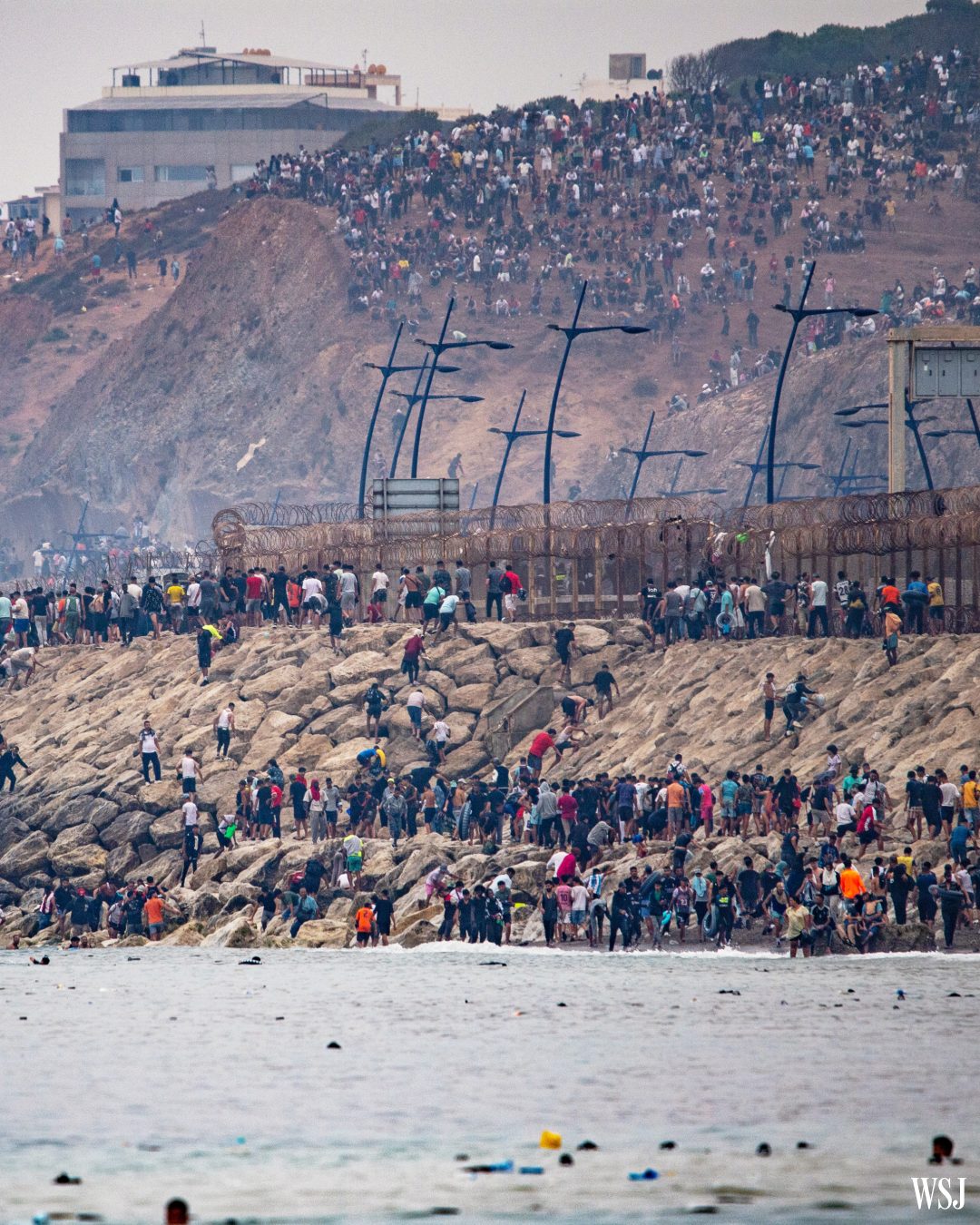
The European Union is working to ease tensions among member states following the arrival of tens of thousands of migrants from Morocco into the Spanish enclave of Ceuta, with some European countries blaming what they describe as Spain’s soft approach to illegal immigration.
The diplomatic efforts come after Spanish authorities confirmed that the number of people who crossed into the territory by swimming or walking on Thursday and Friday was around 70,000, significantly higher than the initial figure of 49,000.
The death toll has also risen to 70, with authorities attributing the fatalities mainly to drowning. Eleven of those who died lost their lives while still in Morocco.
European interior ministers were expected to hold an emergency virtual meeting on Tuesday, where some member states are likely to call for a tougher approach towards migration and demand stronger border controls.
Ahead of the meeting, European Commission President Ursula von der Leyen called for “united action” on border security, signalling that the EU does not believe Spain should shoulder responsibility alone and that other member states could face similar situations.
“From this incident, it is clear that we must do more to further strengthen our borders at critical points,” von der Leyen said in a letter to Spanish Prime Minister Pedro Sánchez, while also praising his government’s swift response.
Although many migrants have begun returning voluntarily to Morocco, citing hunger and difficult conditions, several European countries are taking precautionary measures.
Italy, led by a conservative government with a strong anti-immigration stance, has proposed reviewing arrangements under the Schengen agreement, which allows free movement across most EU member states without internal border checks.
The Schengen area currently allows nearly half a billion people to move freely across participating European countries.
Finland, Denmark and the Czech Republic have supported calls for stronger measures, with Czech Prime Minister Andrej Babiš suggesting that Spain’s Schengen membership should be suspended.
However, Sánchez has criticised some European governments for what he described as decisions driven by “prejudice, fake news, ignorance or right-wing political opportunism”.
In her letter to the Spanish prime minister, von der Leyen stressed that protecting the EU’s external borders is a shared responsibility among member states.
Tuesday’s virtual meeting is expected to highlight deep divisions over migration policy, with far-right governments pushing for stricter controls, while Spain is expected to advocate for a more humanitarian approach.
The Spanish government has also been constrained by court rulings preventing the immediate removal of undocumented migrants in certain circumstances.
A recent judgment ruled that migrants without legal documents cannot automatically be returned or deported, even if they are caught attempting to enter the country unlawfully.
Sánchez believes human trafficking networks are exploiting the legal restrictions to create chaos at entry points. His argument has received support from some human rights organisations, which have questioned the circumstances behind the sudden movement of thousands of migrants from Morocco.