



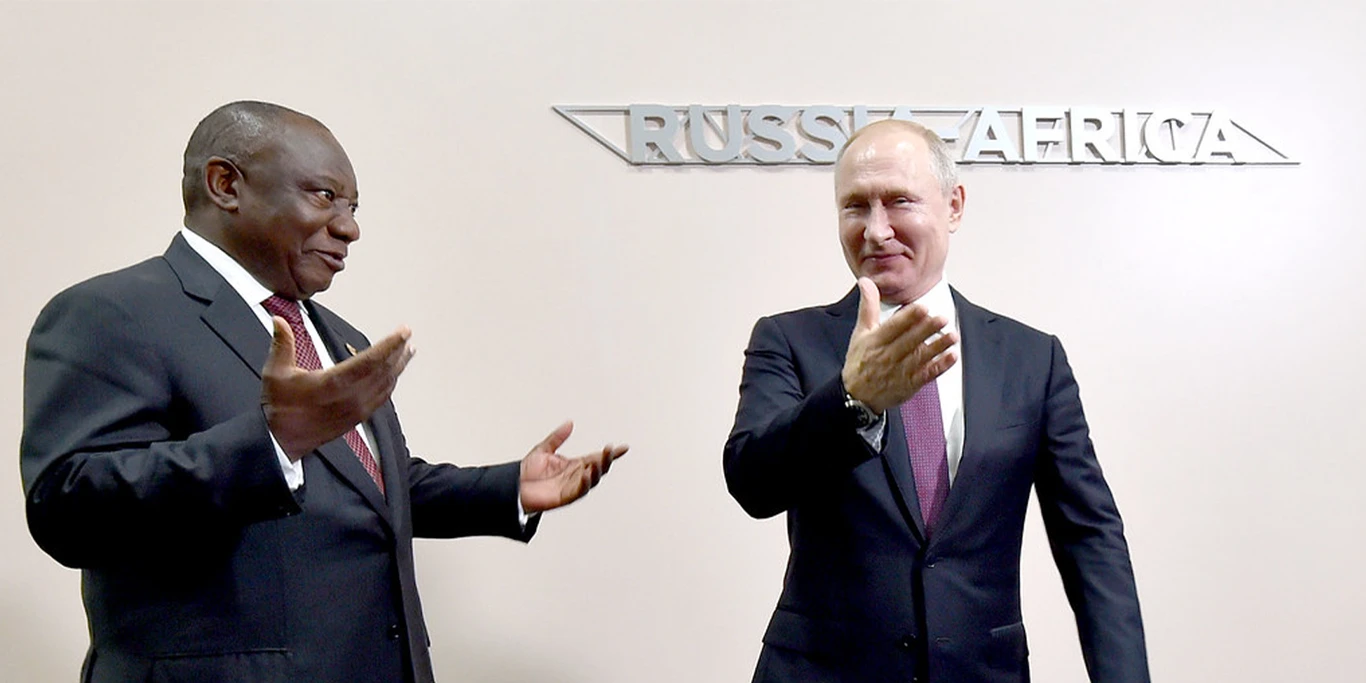
Amid escalating geopolitical tensions, political parties in South Africa, particularly those with socialist leanings, are making fervent calls for the nation to deepen its ties with Russia. Recent conferences held by the Economic Freedom Fighters (EFF) and the South African Communist Party (SACP) have spotlighted what these groups describe as the imperialist aggression of the West, particularly the United States, in regions like Ukraine and the Middle East. Their leaders argue that aligning more closely with Russia may be in the best interest of not only South Africa but also the broader African continent.
In his political report, EFF leader Julius Malema was vociferous in his support for Russian President Vladimir Putin, stating that South Africa should protect its “integral” ally by allowing him to attend next year’s BRICS summit in Johannesburg. “What we witnessed during the previous summit was a global humiliation for South Africa, depicting a government unable to defend its allies against foul imperialist efforts,” Malema asserted. This comment reflects a broader sentiment among the left, which sees Russia as a counterweight to Western dominance.
At the SACP conference, General Secretary Solly Mapaila echoed similar sentiments, characterising the Russia-Ukraine conflict as an orchestrated attempt by Western powers to weaken Russia. He claimed that South Africa must assume a more active role in international affairs to support comrades and assist in establishing a multipolar world order. “The current war in Ukraine is not merely a regional conflict; it serves as an anti-imperialist front,” Mapaila noted, framing the struggle as one between imperialist powers and those seeking independence.
Highlighting the achievements of what he termed “African resistance to imperialism,” Mapaila pointed to the actions of nations such as Burkina Faso and Mali, which have sought to liberate themselves from foreign influence, specifically French control. He firmly stated that South Africa could mediate peace between Russia and Ukraine only by directly confronting the US, which he described as the root cause of the conflict.
The tension comes in light of an apparent discord within the South African political landscape. The ruling African National Congress (ANC) has rejected suggestions of forming a coalition with the opposition Democratic Alliance (DA) to mediate peace in Ukraine. Secretary-General Fikile Mbalula stressed that the ANC remains committed to facilitating dialogue, focusing on both sides of the conflict without compromising its long-standing relations with Russia.
The DA, historically more pro-Western and supportive of Ukraine, has faced backlash for its push to foster ties with Kyiv. A recent move to relax visa restrictions for Ukrainian diplomats sparked protests, with many viewing it as a betrayal of South Africa’s traditional alliances. Mbalula’s remarks rejecting a joint approach to Ukraine reflect a deepening ideological rift between the ANC and DA and illustrate the complicated dynamics of the ruling coalition.
The debate continues to gain momentum, as calls for South Africa to hold Israel accountable for actions in Gaza coincide with discussions about the nation’s stance on Russia. Political analyst Melusi Ncala suggests that the situation illustrates how the Russia-Ukraine conflict has turned into a battleground for global power struggles, with Africa caught in the crossfire.
Opposition parties like the DA are expected to increasingly challenge the ANC’s foreign policy direction, particularly in regard to Israel, as they grapple with their identity and position within the government of national unity (GNU). Marius Fransman, a former deputy minister, noted that the intersection of political agendas complicates South Africa’s international diplomacy, suggesting that a unified voice of government is essential for effective engagement.


