



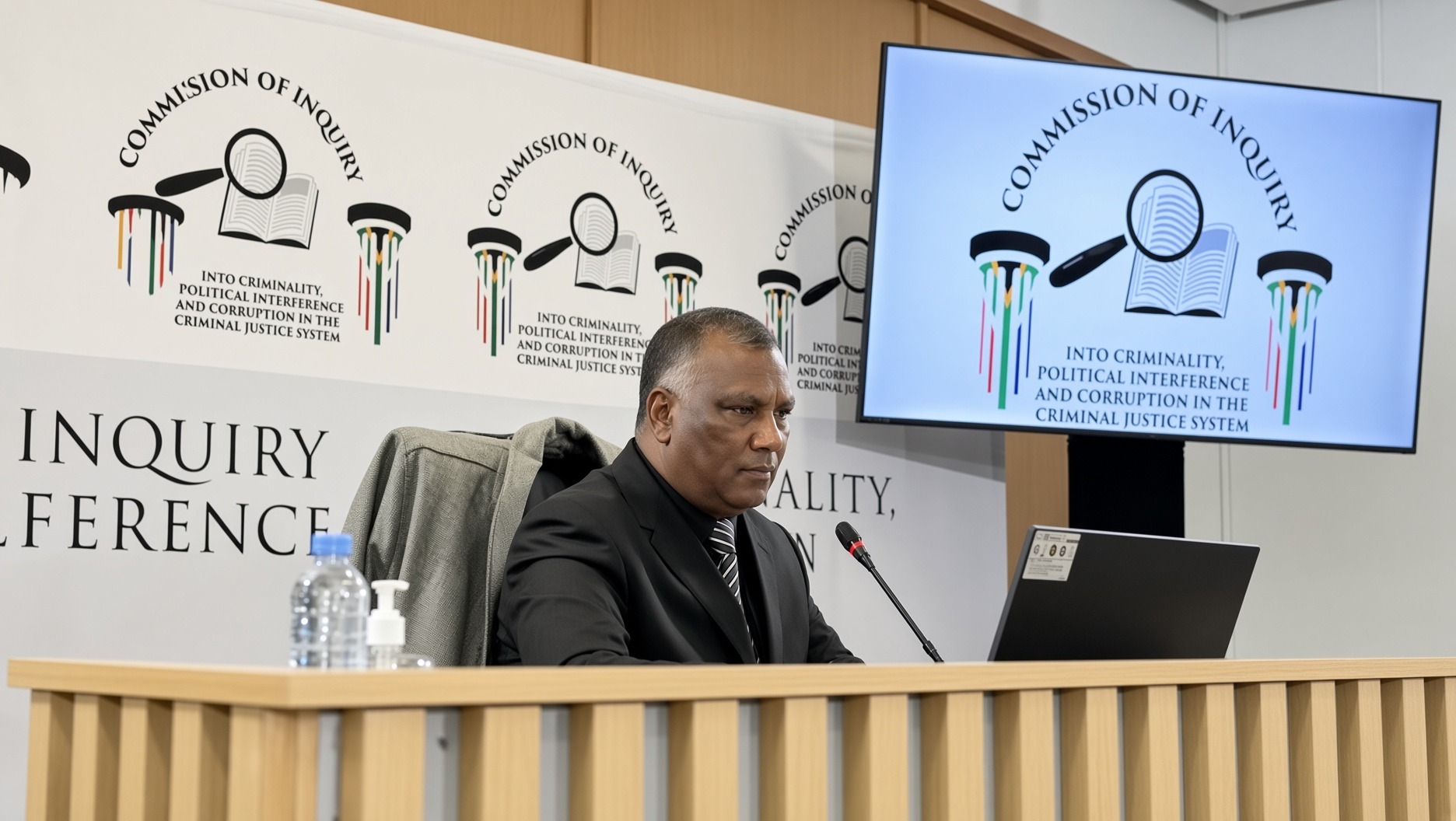
Despite acknowledging that he does not have evidence to substantiate his claims, IPID KZN Deputy Director for Investigations Len John is adamant that police in the province are involved in extrajudicial killings for which they are rarely held accountable.
John testified at the Madlanga Commission of Inquiry and claimed that KZN police often report killing suspects in shootouts, yet officers rarely sustain injuries.
John based his allegations against KZN police on the claim that none of the officers involved in reported shootouts had sustained injuries.
“Despite allegedly being shot at by five suspects, none of the members of the task team suffered any gunshot injuries or indeed any other injuries,” John told the commission while discussing one of the shooting incidents.
The commission questioned John’s reasoning, which appeared to suggest that police officers would need to be injured to establish that suspects were armed.
“No one knew the whereabouts of the members. The scene was processed whilst IPID officials were present. The docket was subsequently registered and the investigations were taken over by IPID KZN. Can I take you up on one issue? You say that none of the members of the task team suffered any gunshot injuries or indeed any other injuries. Yes. In fact, one member, Pedro Rodriguez, had a gunshot hole right at the bottom of his bulletproof vest.
“So there was one gunshot hole, which he alleges was from the same incident,” Madlanga said during an exchange with John.
John also faced difficulties substantiating his claim that police in the province could be killing unarmed individuals.
“If we say three firearms were used and there were nine people, then six of them were unarmed. And when you investigate the scene, you would look at the fact that the six of them were in different places in the house,” he said.
John further accused police of dishonestly linking suspects to crimes, claiming that cases are quickly closed once individuals implicated in them are killed.
“Once a person is killed, the docket gets closed, the cash-in-transit docket, because they link that deceased person as a suspect in the docket without any other investigation.
“Not looking at the firearms that they used, whether those firearms are linked to the cash-in-transit or maybe placed in their cellphone at the scene of the cash-in-transit, that docket is immediately closed. So there is no further investigation done on that cash-in-transit docket that has been opened,” said the investigator.