


Iran’s president, Masoud Pezeshkian, has declared that the country is engaged in a “full-scale war” with the United States after Washington intensified its military campaign against Iranian targets, while Tehran launched attacks on US allies in the Gulf and diplomatic efforts continued behind the scenes.
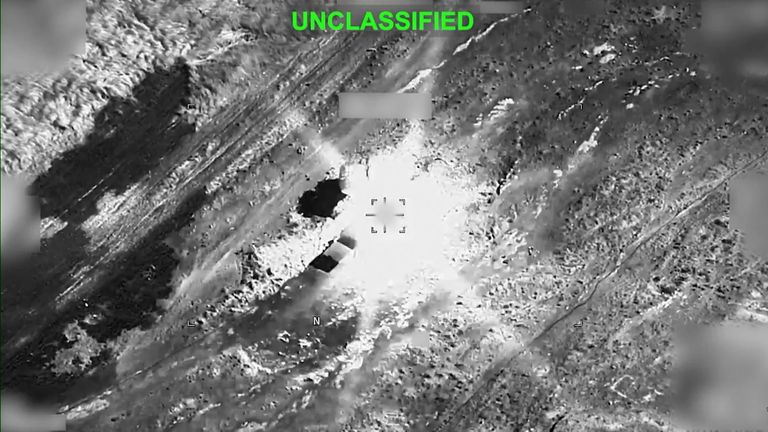
Iranian state media reported strikes on locations including Tabriz, where underground missile facilities are believed to be located, and Bushehr, home to Iran’s only operational civilian nuclear power plant. The US military said its latest operations targeted Iranian military infrastructure, including command centres, air defence systems, coastal surveillance sites, missile and drone launch facilities, maritime capabilities and communications networks.
The escalation has spread across the region, with Iran-linked forces targeting US interests and allies. Iranian attacks were reported in Bahrain and Kuwait, including against areas hosting US military facilities. Bahrain said its air navigation systems were affected by drone attacks but that aviation operations continued.
Kuwait’s military said it was responding to missile and drone attacks, urging residents to follow safety instructions as its air defence systems intercepted incoming threats. Iran’s Islamic Revolutionary Guard Corps reportedly claimed responsibility for strikes on US military targets in Kuwait.
Despite the intensifying conflict, diplomatic channels remain open. Iranian officials said mediators had delivered proposals aimed at securing a temporary ceasefire and reviving negotiations. Iran’s foreign ministry said diplomatic exchanges with Washington were ongoing, while US Secretary of State Marco Rubio said the United States remained open to talks if they were “real” and aimed at achieving concrete outcomes.
Regional tensions widen
The conflict has also drawn in other actors. Yemen’s Houthi movement announced a maritime embargo against Saudi Arabia, threatening further disruption to shipping routes already under pressure from instability in the Gulf and Red Sea.
Houthi military spokesperson Yahya Saree said the group’s decision was a response to Saudi actions and warned that it was prepared for further escalation. The Houthis control territory near the Bab al-Mandab Strait, a key global shipping route connecting the Red Sea and the Gulf of Aden.
The announcement raised concerns for international trade, particularly energy shipments, as vessels have already faced growing risks in the region. Any disruption to major maritime routes could affect global oil markets and increase pressure on supply chains.
Lebanon moves to expand state control
Meanwhile, Lebanon has begun implementing security arrangements in parts of the south as part of efforts to reduce tensions with Israel and strengthen state authority.
The US State Department said the Lebanese army had started taking control of three southern villages under “pilot zone operations”, following discussions between Lebanese and Israeli officials.
The agreement forms part of a broader framework aimed at securing an Israeli withdrawal from southern Lebanon in exchange for steps towards disarming Hezbollah, the Iran-backed militant group. Hezbollah has rejected efforts by the Lebanese government to remove its weapons and has opposed direct negotiations with Israel.
Hamas appoints new leader
Elsewhere, Hamas announced that Khalil al-Hayya has become the group’s overall leader, replacing Yahya Sinwar, who was killed by Israeli forces in Gaza in 2024.
Al-Hayya, Hamas’s former Gaza representative and a key negotiator, is considered a prominent figure within the group’s leadership and is seen by analysts as holding a hardline position.
The leadership change comes as the wider region remains engulfed by conflict, with diplomatic efforts struggling to contain escalating military confrontations involving Iran, the United States and their regional allies.