


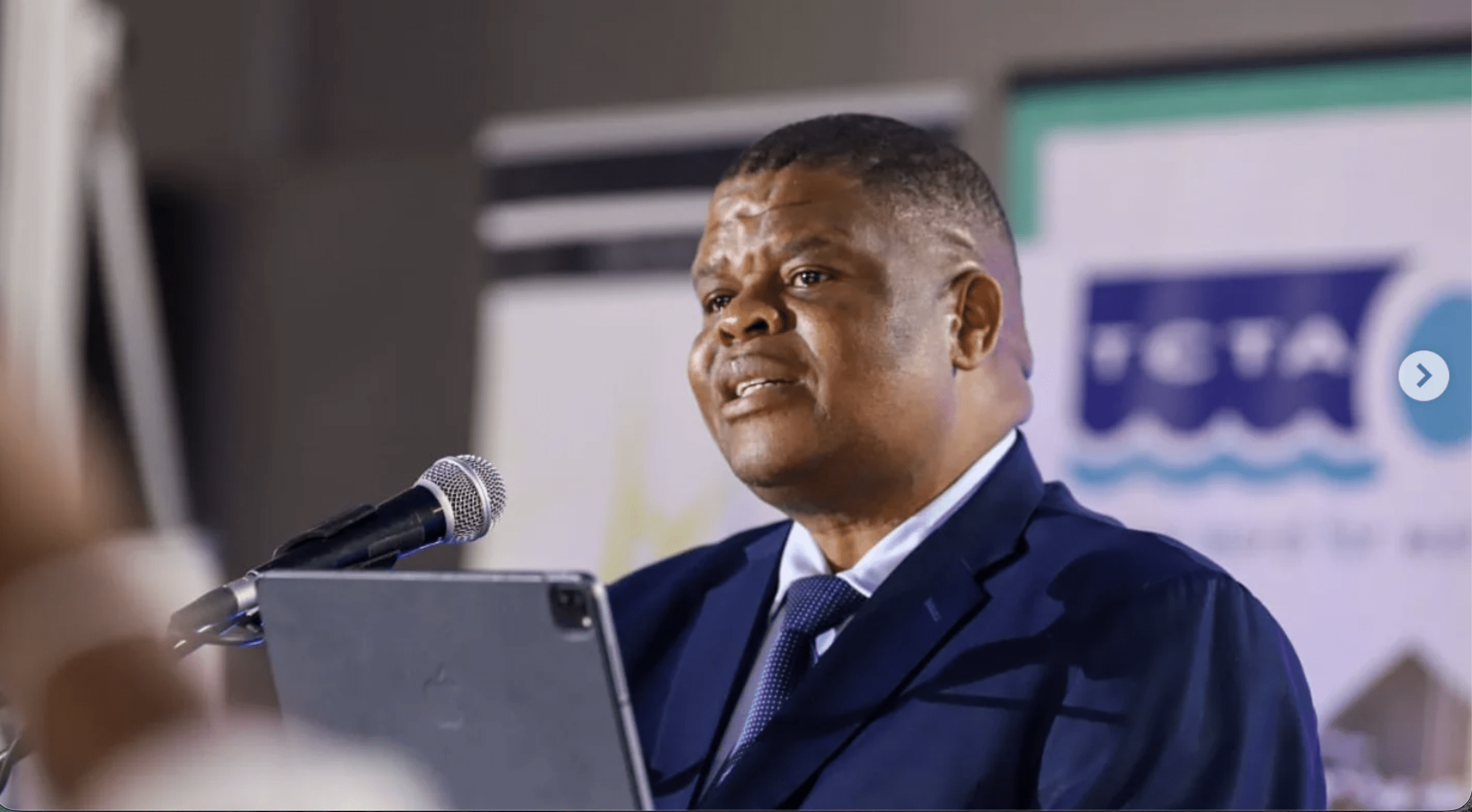
Water and Sanitation Deputy Minister David Mahlobo is confident that withholding monthly equitable share allocations from municipalities owing Water Boards can assist in addressing this growing challenge in the country.
Mahlobo called for a “whole-of-society approach” to address the growing municipal debt owed to the boards, as well as the broader challenges affecting the sustainability of the water sector.
The Deputy Minister revealed this during a webinar convened by the South African Human Rights Commission (SAHRC), which discussed the growing municipal debt burden, its impact on the sustainability of the boards, and the implications for the constitutional right of access to water.
The boards play a critical role in the water value chain by supplying bulk potable water to water services authorities.
However, challenges including poor revenue collection, weak credit control, governance shortcomings and weaknesses in financial management have left some municipalities struggling to meet their payment obligations to Water Boards.
Speaking on YOU FM Newshour, Mahlobo expressed concern about some municipalities failing to adhere to repayment plans agreed between them and Water Boards.
“We have tried to instil the culture of payment, where we engaged with all the municipalities that owed the Water Boards.
“We engaged all the Premiers of affected municipalities; they put up payment plans and, guess what, several of them are defaulting, but some of them are doing well.
“There are some we had to push, working with National Treasury. You would remember that about a month or two ago, Minister Enoch Godongwana had to withhold equitable share allocations, and it was one of the options we had to ensure that these entities are paid,” explained Mahlobo.
He said the government and society must also confront the culture of non-payment for municipal and basic services.
“We must instil the culture because people like to pay for anything under the sun, but when it comes to municipal services, they are not paying.
“But equally, these municipalities have decided not to pay the Water Boards,” said the Deputy Minister.
He cautioned against the severe implications of owing the boards millions of rands due to the culture of non-payment.
“We cannot afford to have Water Boards such as Rand Water, which provides water to four provinces and close to 18 million people, fail due to non-payment for water services.
“At a particular point, we had Sedibeng Water Board, which was supplying water to some parts of provinces such as the Free State, Northern Cape and North West. It had to be discontinued.
“Magalies Water Board was also not doing well, and those are a trickle-down effect if we don’t deal with the question of non-payment,” warned Mahlobo.
He has, however, called on other government entities, provincial and national government departments to pay for their municipal water services.
“Equally, we shouldn’t come across as one-sided. Those who owe municipalities, like government departments, be it provincial or national, must also pay.
“We have agreed as a government that their equitable shares must be withheld until municipalities can provide proof of correct billing of what is owed to them,” stressed Mahlobo.
He reiterated that addressing municipal debt and the broader challenges affecting the water sector requires collective leadership, shared responsibility and decisive action.

