



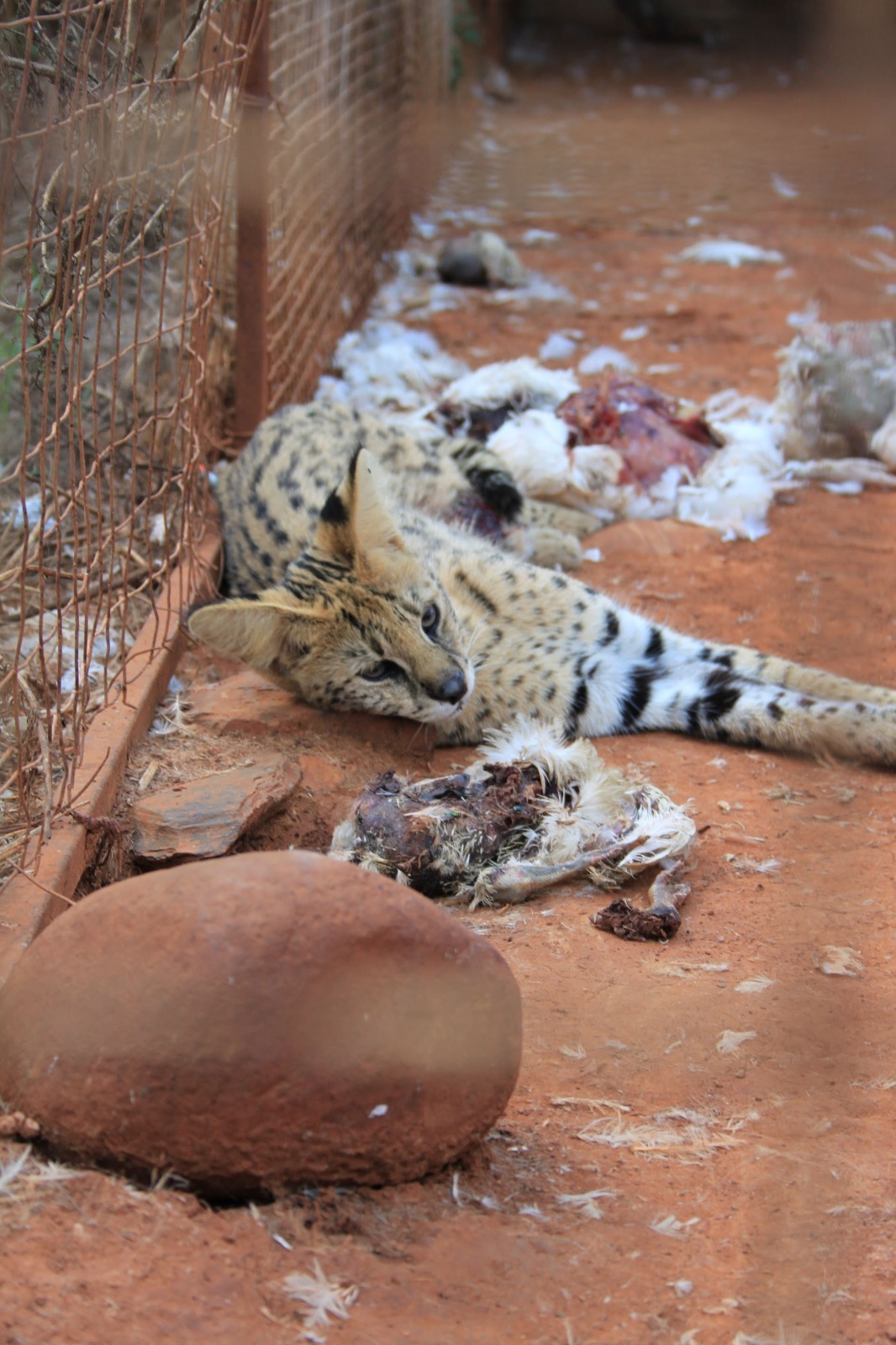
Three Bengal tigers and a serval seized by the National Council of SPCAs (NSPCA) from a captive predator breeding facility in North West have been relocated to safety following alleged severe animal welfare violations.
According to the NSPCA, two of the tigers were found in an enclosure contaminated with faeces and decomposing carcasses, while the third tiger and the serval were suffering from untreated injuries.
Douglas Wolhuter, chief inspector and manager of the NSPCA’s Wildlife Protection Unit, said the animals were removed from the facility in collaboration with a wildlife veterinarian and members of the Groot Marico South African Police Service (SAPS).
The facility houses both indigenous and exotic animals. However, Wolhuter said inspectors had identified several serious welfare concerns.
“Enclosures across the facility are too small for the number of animals kept in them.
“There is no functional cold storage for meat, and the animals are fed the carcasses of cattle and chickens that died.
“Several lions and a leopard are obese, with no evidence of vitamin and mineral supplementation.
“Lions and tigers in neighbouring enclosures fight through the fencing, exposing them to stress and the risk of injury,” Wolhuter said.
He added that during an earlier inspection, officials discovered the decomposing remains of lions and crocodiles on the property. The matter was reported to the North West Department of Economic Development, Environment, Conservation and Tourism (DEDECT).
Wolhuter said that during an inspection in June 2026, conducted alongside a DEDECT official, the facility’s owner confirmed that the electric fencing around the predator enclosures had not been operational since 2021.
According to Wolhuter, the DEDECT official noted that this was in contravention of the facility’s permit conditions.
“No animal should be kept in conditions like these,” he stressed.
The NSPCA said the case illustrates its concerns about the captive predator breeding sector, which it believes places financial gain above animal welfare.
The organisation has launched a criminal investigation into alleged contraventions of the Animals Protection Act 71 of 1962.
“A case has been opened for alleged contraventions of the Animals Protection Act 71 of 1962, and the NSPCA is compiling evidence for the docket.
“This will be the second docket regarding this facility, the first still pending with the prosecuting authority since 2021.
“We will continue to fight for these animals, who have no voice yet face unimaginable suffering,” Wolhuter concluded.

