


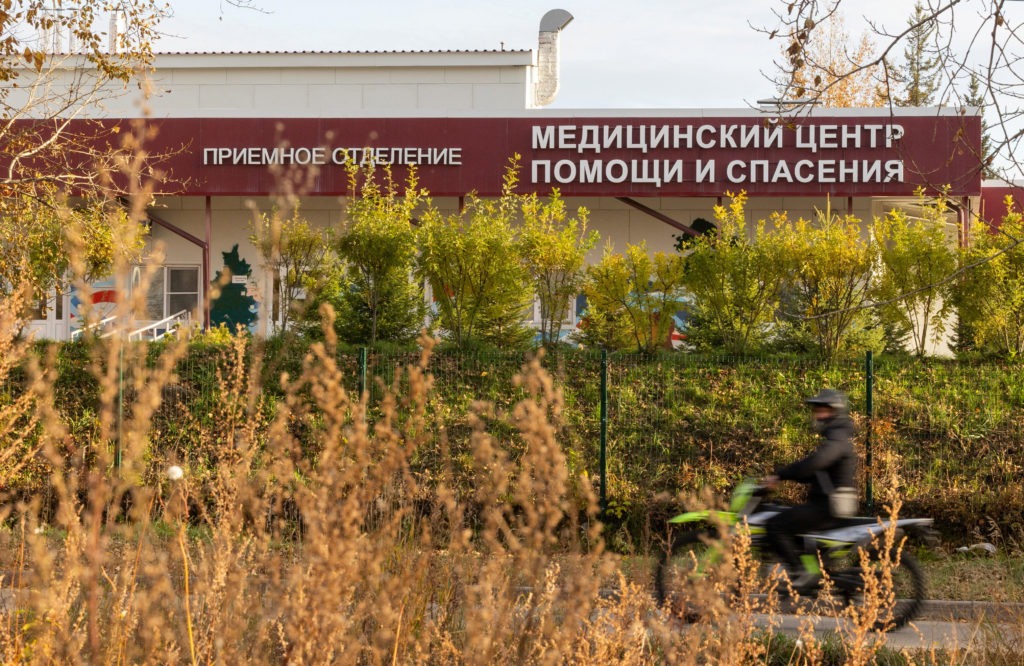
A laboratory worker at a plague research institute in Siberia has died after falling ill in circumstances that remain unclear, prompting authorities to quarantine about 200 people who may have been in contact with her.
The death has fuelled public health concerns on social media, although Russian authorities said on Monday that the situation was under control.
The World Health Organisation (WHO) said that, based on the information currently available, the public health risk to the general population appeared to be low.
“New risk assessments would be conducted once further information became known,” the WHO said.
The laboratory worker was identified by local media as Darya Shipilova, a 28-year-old employee at the Irkutsk Anti-Plague Research Institute of Siberia and the Far East.
There have been conflicting reports about how and where Shipilova became ill. Authorities said she died from pneumonia of unknown origin and stressed that there was no evidence linking her death to her work at the institute.
Authorities move to contain concerns
Russia’s health watchdog, Rospotrebnadzor, said the institute had found no evidence of an accident involving the handling of pathogens.
The statement came after rumours circulated on social media that Shipilova had dropped a test tube containing live bacteria.
Anna Popova, the head of Rospotrebnadzor, travelled to Siberia over the weekend for an emergency meeting.
According to Russian media reports, about 200 people who had been in contact with Shipilova were placed in quarantine. Parts of the hospital in Shelekhov, where she died, were also cordoned off, while an aluminium plant instructed its workers to wear masks.
Rospotrebnadzor later said officials in Irkutsk Region had identified two cases of COVID-19 and two cases of rhinovirus infections among people who had been in contact with Shipilova. No other infectious diseases were detected.
Igor Kobzev, the governor of Irkutsk Region, said Shipilova had died from “pneumonia of unknown aetiology”.
“Importantly, over the past few days, no new cases of staff from the Anti-Plague Institute seeking medical attention have been identified,” he said.
Kobzev said all known contacts of the deceased woman had been identified, examined and placed under medical supervision.
Plague concerns
Plague is endemic in parts of Siberia, where the bacterium that causes the disease, Yersinia pestis, occurs naturally among small wild mammals and their fleas.
Human cases are rare in Russia, although plague continues to occur in other parts of the world, particularly in Africa.
The disease can occur in three forms, depending on which part of the body is affected. Pneumonic plague infects the lungs and can spread through infectious respiratory droplets.
If diagnosed promptly, plague can be treated with antibiotics. Without treatment, however, it can become fatal within one to six days.
The reported death has nevertheless raised concerns given the woman’s employment at a specialist anti-plague research institute.
US monitoring
United States President Donald Trump described the death as a “big problem for Russia” and offered to assist Moscow.
“We’ll help,” Trump said. “Anybody that has that kind of a problem, we’re always willing to help.”
US Secretary of State Marco Rubio said Washington was closely monitoring the situation.
Russian authorities have urged the public to remain calm, saying there is currently no evidence that Shipilova’s death was connected to her work or that a plague outbreak has occurred.
Officials said the situation remained under control and that those identified as contacts were being monitored.