


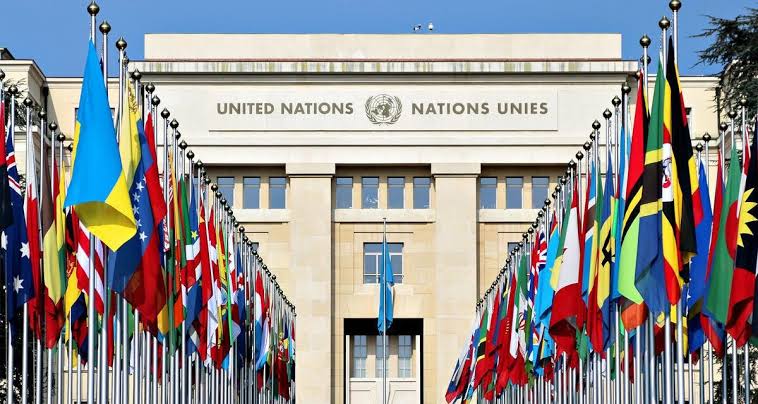
GENEVA – The growing role of artificial intelligence in modern warfare is putting pressure on world leaders to establish international rules governing weapons that can identify and attack targets without direct human intervention.
Representatives from 128 countries are meeting in Geneva this week to consider whether formal negotiations should begin on legally binding restrictions for autonomous weapons systems, commonly known as “killer robots”.
The discussions come as military forces increasingly explore artificial intelligence to improve battlefield operations, including the ability to identify targets and launch attacks at greater speed.
However, the prospect of machines making decisions that determine whether a person lives or dies has raised serious humanitarian and legal concerns.
The International Committee of the Red Cross (ICRC), human rights organisations and senior religious and international leaders have called for stronger safeguards against the uncontrolled development and use of these systems.
AI is changing the future of warfare
The development of autonomous weapons is becoming an increasingly important issue as countries invest in military artificial intelligence.
The war in Ukraine has highlighted the growing role of drone technology, with Russia reportedly using fully autonomous drones and Ukraine pursuing the development of autonomous drone swarms.
Such capabilities have intensified concerns about the potential consequences of allowing weapons to select and engage targets without meaningful human oversight.
Laurent Gisel, head of the Weapons and Conduct of Hostilities Unit at the ICRC, said advances in artificial intelligence had made international regulation increasingly urgent.
The organisation is calling for prohibitions on unpredictable autonomous weapons and systems designed or used to directly target human beings.
International support grows, but major powers remain divided
There are signs of growing international support for establishing rules governing autonomous weapons.
At the UN General Assembly last month, 163 countries supported a resolution calling for negotiations on the issue.
However, the resolution faced opposition from five countries: the United States, Russia, Belarus, Israel and North Korea.
Nine countries abstained, including China, Iran and Saudi Arabia.
China’s position has been described as a “carefully cultivated ambiguity” by Laure de Roucy-Rochegonde of the French Institute of International Relations.
The divisions highlight the challenge of reaching an international agreement when countries have different military interests and approaches to emerging technologies.
Disagreement over how quickly rules should be developed
Countries also remain divided over the process and timeframe for introducing international regulations.
The United States has proposed a five-year process aimed at developing a non-binding instrument.
Meanwhile, the ICRC and non-governmental organisations are advocating for a much shorter, one-year timeline to establish legally binding rules.
In 2023, UN Secretary-General António Guterres and ICRC President Mirjana Spoljaric Egger called on governments to ban autonomous weapons before 2026.
Human Rights Watch has warned that failure to take decisive action could leave civilians dangerously exposed to the risks posed by these weapons.
What is at stake for civilians?
One of the central concerns surrounding autonomous weapons is the possibility that machines could make life-and-death decisions without sufficient human judgement.
Critics argue that unpredictable systems could create serious risks for civilians, particularly in complex conflict environments where distinguishing combatants from non-combatants is essential.
UN Secretary-General António Guterres and Pope Leo XIV have also warned about the dangers of transferring decisions over human life to fully autonomous machines.
The Geneva meeting will therefore focus on whether countries are prepared to move beyond political declarations and begin negotiations on enforceable international standards.
However, with several major military powers opposed to the proposed resolution and disagreements over the form regulations should take, reaching consensus remains a significant challenge.