




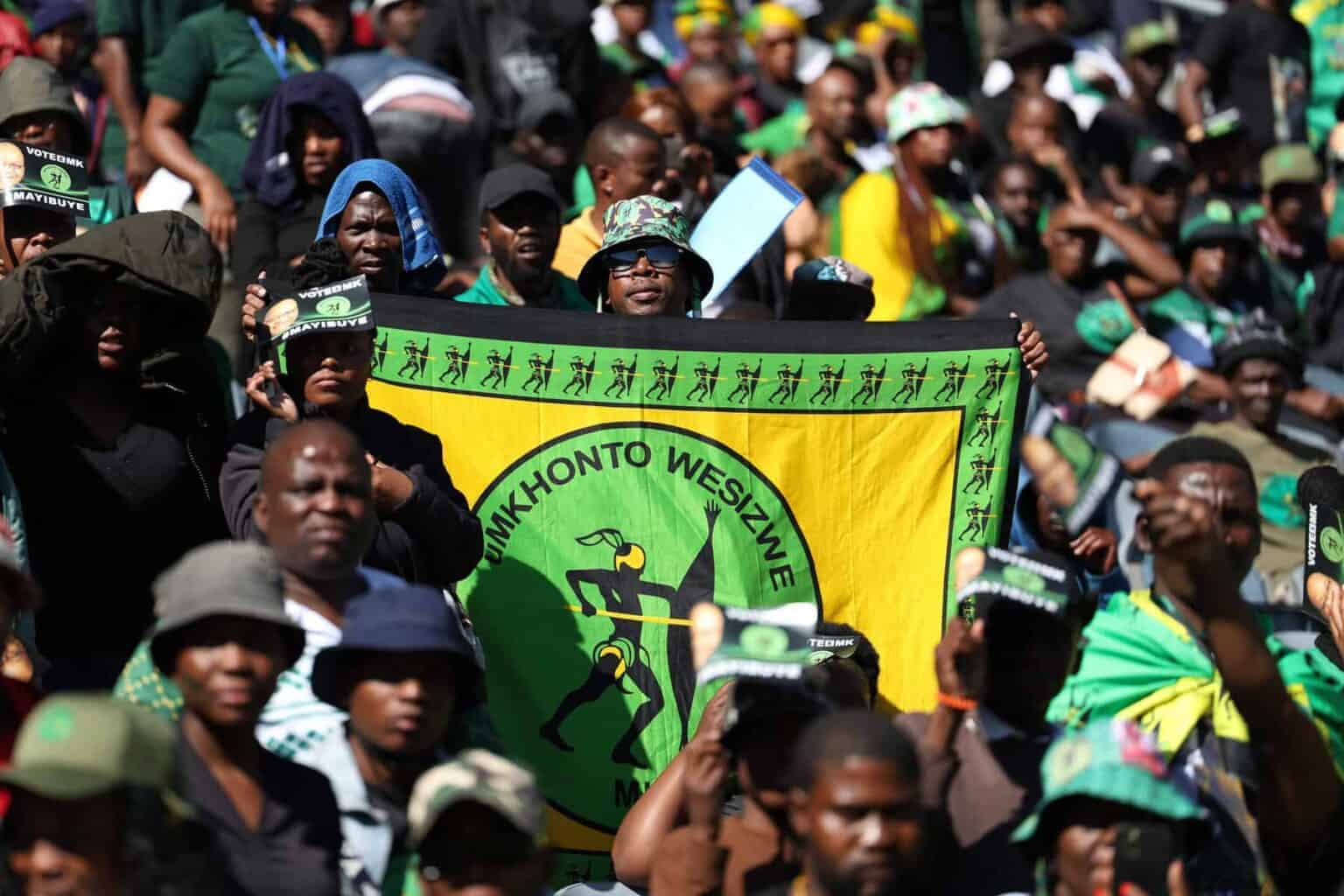
The future of South Africa’s so-called ‘Progressive Caucus’ teeters on the brink as internal rivalries deepen, marked by intensifying tensions between the Economic Freedom Fighters (EFF) and the newly formed uMkhonto Wesizwe Party (MKP). Even with Parliament currently in recess, the struggle for political supremacy continues unabated, played out fiercely on social media as supporters on both sides take the battle public.
At the heart of this conflict is a series of incendiary accusations. The EFF has alleged that MKP is luring its prominent leaders away, citing the departures of key figures such as Floyd Shivambu, the former Deputy President of the EFF, and Dali Mpofu, who previously served as national chairperson. Both have been vocal in their criticisms of the red berets since their defection.
In response, MKP adamantly denies these allegations, insisting instead that their rise in support stems from disenchantment with the EFF, with leaders asserting that many individuals are ‘abandoning’ their previous affiliations in favour of MKP’s more attractive vision. “Asibabize bayazizela,” they claim—an assertion that people are joining MKP of their own volition.
The animosity has spurred public statements between the parties, with EFF leader Julius Malema targeting former President Jacob Zuma over unresolved legal issues. Malema stated outside the Constitutional Court in Johannesburg, that Zuma “owes us the legal fees” from prior court victories, further igniting tensions between the EFF and the Zuma faction.
Meanwhile, MKP leaders have voiced their discontent, labelling the EFF’s actions as opportunistic. They claim that the EFF’s tactics, including pursuing Zuma’s alleged misdeeds, are superficial and serve only to distract from the real issues at hand.
The rhetoric escalated further when Shivambu addressed his supporters in Mahonisi, Limpopo, declaring himself the sole founder of the EFF. His comments provoked immediate outrage from EFF supporters, as he claimed to have single-handedly established the party’s identity, goals, and even its office location, which many in the party dispute.
Political analyst Melusi Ncala observes that despite the turbulent political landscape, the progressive caucus is unlikely to crumble completely. “It would take something exceptional for it to break down altogether,” Ncala explained, noting that while EFF’s internal dynamics pose challenges, the MKP has also faced difficulties managing inexperienced politicians in parliament.
The stakes are high for both parties, as MKP currently holds the title of official opposition after the Democratic Alliance shifted to the Government of National Unity (GNU). Should the progressive caucus dissolve, it could result in the EFF finding itself in the unique position of opposing a fellow opposition party, potentially strengthening the GNU.
In the midst of these conflicts, archbishop Thabo Makgoba of the Anglican Church has sharply critiqued President Cyril Ramaphosa’s administration, asserting it has not lived up to the expectations of the electorate, further framing the backdrop of a politically charged atmosphere.


