


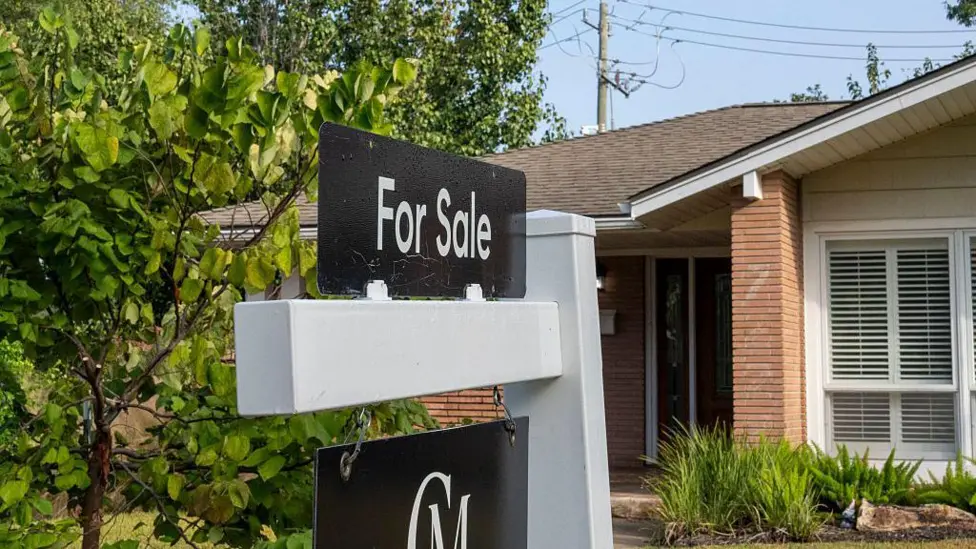
President Donald Trump is set to announce a major housing affordability initiative next week at the World Economic Forum in Davos, Switzerland, that would permit Americans to withdraw funds from their 401(k) retirement accounts to cover down payments on homes.
The proposal was first teased by White House National Economic Council Director Kevin Hassett during a Friday interview on Fox Business’s “Mornings with Maria.” Hassett stated that Trump would present the “final plan” in Davos, where he plans to accompany the president.
“We’re going to allow people to take money out of their 401(k)s and use that for a down payment,” Hassett said, highlighting the sharp rise in homebuying costs since the pandemic—monthly mortgage payments have roughly doubled for many families, and typical down payments have climbed from about $15,000 to $32,000.
Hassett outlined a potential mechanism to mitigate risks to retirement security: “Suppose that you put 10% down on a home, and then you take 10% of the equity of the home and put it in as an asset in your 401(k). Then your 401(k) will grow over time.” He argued this approach would allow retirement savings to benefit from home appreciation, solving a “liquidity constraint” while positioning buyers for long-term wealth building.
Currently, early 401(k) withdrawals generally incur a 10% penalty plus income taxes (with limited exceptions, such as loans up to $50,000 or certain hardships), unlike IRAs which permit up to $10,000 penalty-free for first-time homebuyers. The Trump plan’s exact details—such as penalty waivers, tax treatment, withdrawal limits, or repayment requirements—remain under discussion and are expected to be clarified in Davos.
The announcement is part of a broader push to address housing affordability, a top voter concern ahead of the 2026 midterm elections. Other recent Trump proposals include directing Fannie Mae and Freddie Mac to purchase $200 billion in mortgage-backed securities (credited with helping push 30-year mortgage rates below 6% recently) and banning large corporate investors from buying single-family homes.
Experts are divided. Supporters view it as aligning with retirement accounts’ purpose of funding major life expenses, akin to temporary pandemic-era relief measures. Critics, however, warn it may not tackle underlying supply shortages and could inflate prices by boosting demand from those with existing savings—only about 55% of Americans have retirement accounts, disproportionately higher earners. Low-income workers, who often lack access to **401(k)**s, would benefit least.
Some analysts also caution that depleting retirement funds risks long-term security if home values fall, potentially leaving individuals worse off. The White House has not yet commented on potential tax implications or whether the changes would require congressional action.
More details are anticipated from Trump’s Davos presentation next week.