


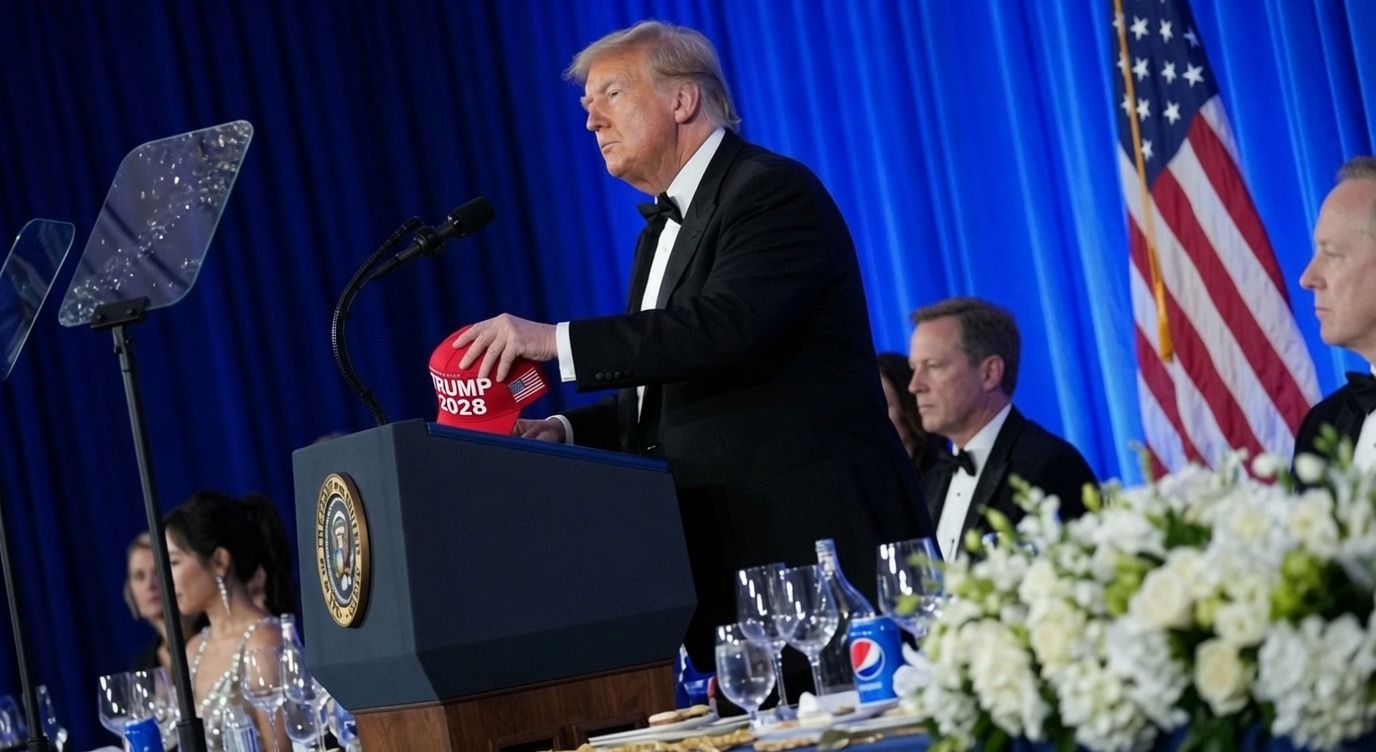
US President Donald Trump used a rescheduled White House Correspondents’ Dinner to criticise the media, revisit his political ambitions and reinforce his influence over the Republican movement.
Speaking at the Waldorf Astoria hotel in Washington, Trump accused journalists of suffering from “Trump derangement syndrome” and attacked outlets that have published critical reports about his administration.
The event, which was delayed after an alleged assassination attempt disrupted the original dinner in April, highlighted the continued security challenges facing the US president and other senior officials.
Trump began his address by acknowledging the attack and saying the event’s return showed that “the show must go on”. However, his speech quickly shifted towards criticism of political opponents and media organisations.
The president also reignited speculation about his future political plans by joking about serving additional terms in office, despite constitutional limits preventing a president from serving more than two terms.
Trump’s comments underline the ongoing political uncertainty surrounding the next phase of US leadership, with businesses and investors closely monitoring policy direction, regulatory changes and potential shifts in government priorities.
The dinner also marked Trump’s first appearance at the high-profile media gathering after years of strained relations with journalists. His return reflected the continuing tension between the administration and major news organisations.
Security concerns remained a major focus of the event, with authorities implementing tighter measures following the previous disruption. US Secret Service officials said the current threat environment facing senior government figures remains exceptionally high.
For businesses operating in the US and internationally, the event reinforced the importance of political stability, policy certainty and security considerations as key factors shaping investment decisions.
Trump’s appearance demonstrated his continued ability to dominate political discussion, with his remarks likely to fuel further debate over the future direction of American politics and its potential impact on markets and government policy.