


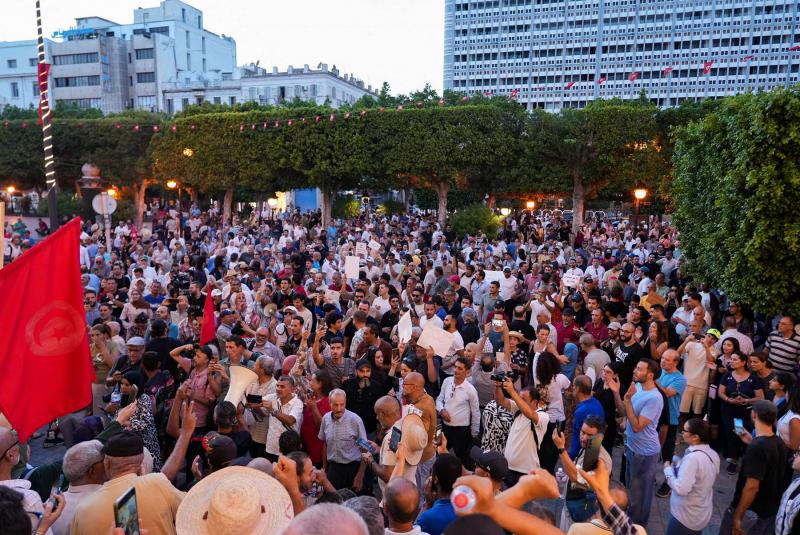
Growing public frustration over basic services and political repression brought hundreds of Tunisians onto the streets of the capital on Thursday, with demonstrators directing their anger at President Kais Saied’s government.
Protesters held signs bearing the words “thirst” and “darkness”, highlighting persistent shortages of drinking water and widespread electricity cuts as Tunisia endures intense summer heat.
“Today, the Tunisian people are living in humiliation,” former lawmaker Samir Ben Amor told AFP. “There’s no water, no electricity, and no freedom.”
The demonstration also turned into a broader expression of opposition to the government. Protesters denounced what they described as increasing repression and called for the release of people they regard as political detainees.
“We stand against the catastrophic situation in which Tunisia has now found itself,” veteran leftist opposition figure Ezzeddine Hazgui said.
“There’s no state left, no institutions — just a man who ignores everything, leading the country,” he added.
The protests come amid mounting concern over deteriorating public services. The Tunisian Forum for Social and Economic Rights (FTDES) has reported hundreds of demonstrations across the country in recent weeks, with many focused on water shortages and electricity disruptions.
The unrest also reflects Tunisia’s deeper political tensions. The country was widely viewed as the sole democratic success story to emerge from the Arab Spring protests of 2011. But Saied’s seizure of broad executive powers in 2021 triggered a sharp political rupture and drew sustained criticism from rights groups.
Since then, dozens of government critics have faced prosecution or imprisonment, including in cases involving terrorism-related allegations and a 2022 law criminalising the spread of what authorities deem false information.
For protesters in Tunis, however, the immediate grievances are increasingly tied to everyday life: access to water, reliable electricity and the ability to speak openly about the country’s direction.
The combination of worsening service disruptions and political discontent has created a potent source of public anger, putting renewed pressure on Tunisia’s government as the country confronts another difficult summer.