



Anti-foreigner groups have not made use of opportunities to contribute to laws governing immigration, but have instead opted to complain on social media.
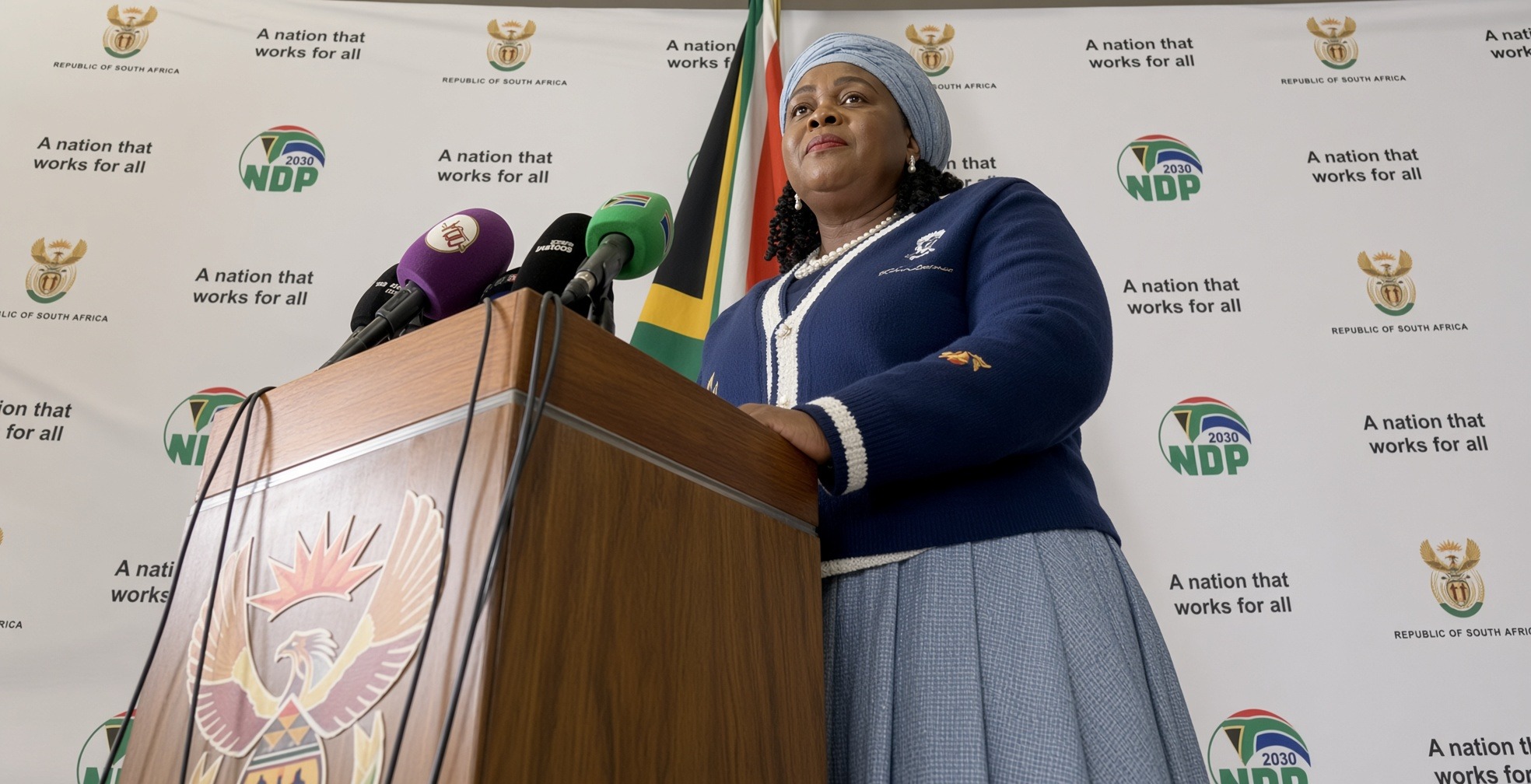
This is according to Justice and Constitutional Development Minister Mmamoloko Kubayi, who led a media briefing by the Inter-Ministerial Task Team on Immigration in Pretoria on Tuesday.
Kubayi said many of the demands made by March and March, as well as other anti-immigration groups, require the government to act unlawfully and therefore cannot be entertained.
“So what we are appealing for South Africans is that there are laws in the country. When you say your government must do certain things, please look at that law, because you must not ask the Minister of Justice to act unlawfully against the law. It’s not correct.”
She said that while the groups are vocal on social media and through protests, those aggrieved by the presence of foreign nationals in South Africa have not shown the same level of engagement when it matters most — when they have an opportunity to influence laws governing immigration.
“South Africans are allowed, when laws are being reviewed, to input and to shape the direction of their laws. What has been the practice is that many of us are comfortable to sit on our chairs and critique. When the time comes for meaningful participation in terms of inputs, we don’t. We don’t write to Parliament.
“When Parliament goes, I mean, let’s take a number of bills that have been crisscrossing in the country. How many of us have taken effort when the White Paper has been consulted across the country on immigration? Did we go to those meetings to go and make inputs? Majority of us, no.
“And we think that we can make laws by tweeting. We can make laws by writing on Facebook. That’s not how lawmaking in this country is,” said Kubayi.
The minister also denied claims by the groups that they were being ignored by the government when raising their frustrations about immigration.
“Somebody must tell me where did they send the request, because honestly, I can tell you, we’ve met everybody that requested to meet.
“We continue to meet. We’ve been called. If I’m not able to go as an IMC, I can tell you. We look at the area of work we assign, either a technical, either a ministerial, we’ve made it all jointly.
“And if we can’t be in two physical, we’ve done virtual meetings. We had, I mean, we can’t have international people asking to see us that they see us, and South Africans say they can’t get hold of us,” she said.