



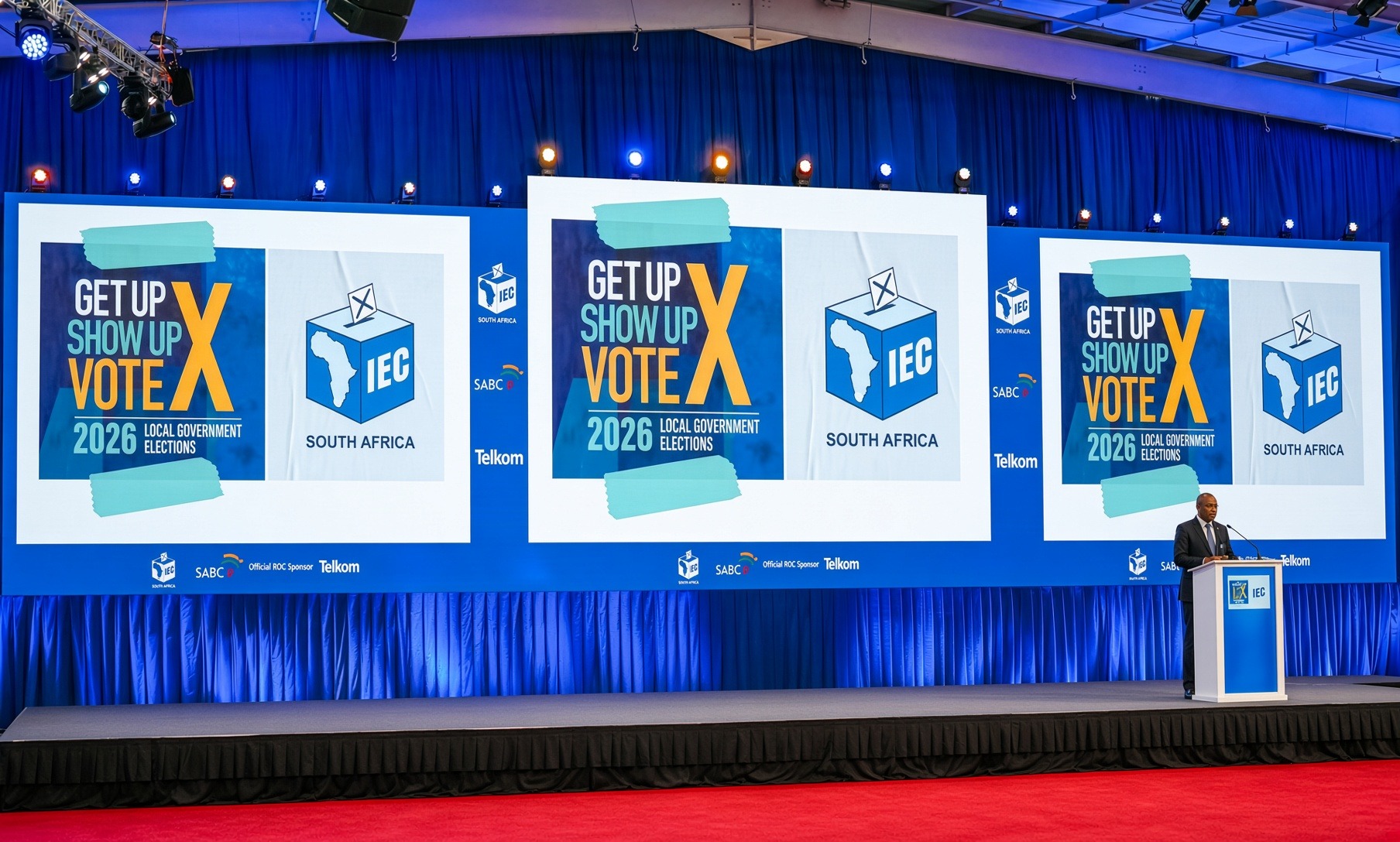
The Electoral Commission of South Africa (IEC) has defended the use of a coin toss to break electoral deadlocks, while acknowledging that the practice remains controversial.
The commission has also committed to considering suggestions from South Africans as part of its ongoing review of electoral systems and procedures.
Speaking at a media briefing at the IEC’s Centurion headquarters on Friday, following last week’s local government elections, the commission said it reviews lessons after every election but stressed that the coin toss remains the only lawful mechanism currently available to resolve an electoral tie.
IEC Chairperson Mosotho Moepya said the commission continuously evaluates its performance to identify areas that require improvement.
“We learn in every election what things have worked well for us, what things haven’t worked well, and what it is that we need to challenge ourselves to do better. That process takes place after every election.
“In fact, it is so serious that it forms part of our ongoing improvement process. We speak openly to all stakeholders, and once we’ve had all of them, we develop a list of action points that we’ve got to go through,” said Moepya.
He reiterated the commission’s commitment to delivering free and fair elections while ensuring a positive voting experience for South Africans.
“Anyone can hold us to account on those, and that makes us a proud electoral management body,” he said.
The IEC maintained that a mechanism for resolving electoral deadlocks is necessary, arguing that elections must ultimately produce a definitive result.
“An election must result in an outcome. Deadlock-breaking mechanisms must exist, but it would be pointless to have an election that does not have an outcome, and have another one that has no outcome, and have another one. It must eventually have an outcome,” Moepya said.
Under South African electoral law, where a ward or seat allocation results in an exact tie, the outcome may be determined by lot. This can involve a coin toss, conducted publicly in the presence of party agents and observers.
The IEC said that although the method may appear arbitrary, it is transparent, lawful and final. It also argued that this approach avoids the possibility of repeated and costly by-elections that could potentially produce another tie.
The commission added that its action points following the 2026 elections would be published, allowing stakeholders and the public to monitor progress and hold it accountable for implementing improvements.
The review will cover areas including election logistics, vote counting, results capturing and communication, as well as whether existing deadlock-breaking procedures should be reconsidered ahead of the next elections.